





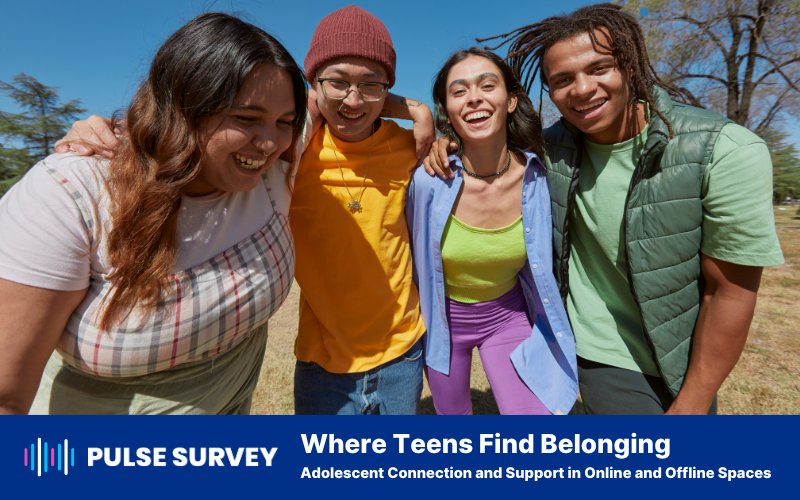
Amid growing concerns about adolescent loneliness and social isolation, this report examines how teens experience belonging across their online and offline lives. The Digital Wellness Lab at Boston Children’s Hospital surveyed nearly 1,600 U.S. adolescents aged 13-17 in summer 2025 to understand their sources of connection and support, the role of online friendships in their social lives, and how belonging differs across digital platforms.
Our findings reveal a generation navigating a complex connection landscape. While most teens report a general sense of belonging, many simultaneously feel like outsiders, highlighting a nuanced emotional reality. Friends and family remain the strongest sources of support, with high levels of feeling safe and accepted at home, though school belonging lags behind. Many teens report having close friends they’ve never met in person, and most say these online friendships are equally important as offline ones. Platform experiences vary significantly: messaging apps and social media foster the strongest sense of belonging, while boys report notably higher belonging in gaming spaces. Critically, teens with the strongest offline support also report the strongest online belonging, suggesting digital spaces extend rather than replace in-person connection.
These findings challenge simple narratives about technology’s impact on youth, revealing that online and offline belonging are deeply interconnected rather than competing forces.