




Introduction
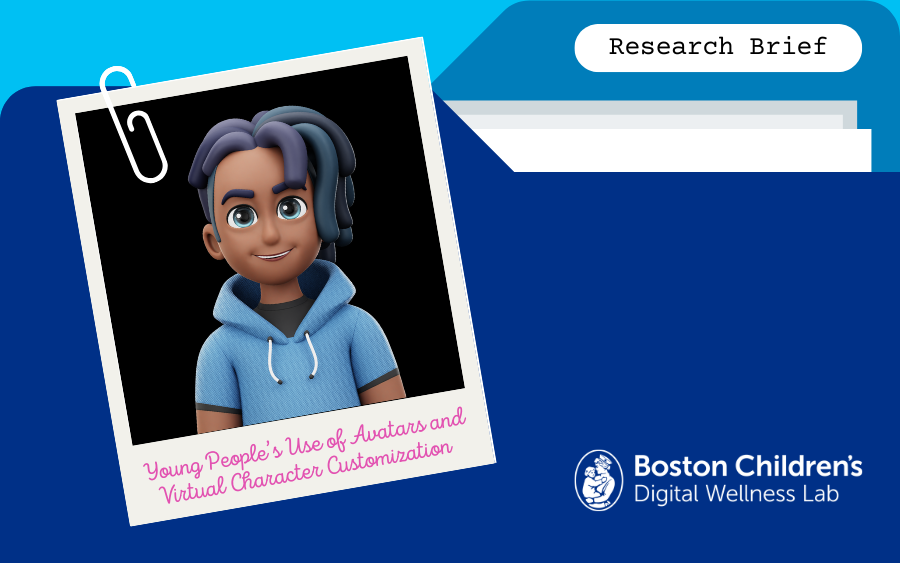
Digital spaces increasingly offer young people opportunities to explore identity, creativity, and social connections. One of the most visible ways this occurs is through the use of avatars in video games and virtual worlds.
Avatars are virtual representations of oneself or a customizable playable character within a virtual space, like a video game. Avatars are prevalent in many games that young people enjoy (e.g. Minecraft, Roblox), and personalizing avatars can be an enjoyable process for many young users of games and virtual spaces. However, avatars might be used to explore both idealized or even problematic representations of self or others, or express stereotypical representations of gender, culture, and race. For parents of young people and government/regulators especially, monetization of custom features in gaming has also come under scrutiny in recent years.
This research brief will explore the context of avatar creation, customization, and social interaction with this context and concern in mind. This allows for a more clear and comprehensive understanding of the history of avatars in video games, how they have evolved, and how we can ensure young people are creating their virtual selves and interacting with other avatars in healthy ways. Due to the rapidly changing landscape of digital spaces, this research brief will primarily discuss findings from the past five years.
Is This Avatar You, or “Better”?
When young people create their avatars in online spaces, they may begin to identify with their avatar, or prefer avatars that are more similar to themselves. Previous video game avatar research has found that young people’s experience playing with an avatar they perceive as representing an extension of themselves or identify with as an “idealized” version of themselves can enhance enjoyment in gameplay (e.g. Baysden et al., 2022; Devlin, 2025; Hefner et al., 2007). For younger children and early adolescents, recent research suggests that avatars are created both to represent themselves and an ideal or aspirational persona, including physical and personality traits (Fu et al., 2025).
Sometimes, however, people may begin to embody the characteristics of their avatar within an immersive virtual environment – this was first described in research in 2007 and termed the “Proteus effect” (Yee & Bailenson, 2007).
For example, adolescent gamers in China who have higher levels of competitive motivation may exhibit more trait aggression that may be mediated by identification with an avatar within a popular battle-area game (Chen et al., 2022). In a virtual reality exergame, male participants who used a more muscular avatar had a lower perceived exertion during an isometric exercise (Kocur et al., 2020). Further research suggests this identification may even extend to fears beyond the game, as younger children are more likely to avoid games where their avatar might die (Donkin, 2019).
The impact of young people relating to their avatars might be neutral, or even support prosocial behavior, there is a risk that intense identification or idealization of an avatar might be indicative of problematic gaming behaviors, as adolescent and young adult gamers who score higher on problematic gaming measures are also more likely to identify or idealize their avatar (e.g. Stavropoulos et al., 2020; T’ng et al., 2021; Zhang et al. 2022). However, it is important to recognize that a gamer’s mental health or self-esteem may may influence these outcomes, as gaming with the intention to socialize, rather than escape, might lessen the association between avatars and problematic gaming (e.g. Stavropoulos et al., 2020; T’ng et al., 2021; Zhang et al. 2022).
Body Image in Avatar Creation
In video games and in other virtual spaces, creating an avatar often involves not only choosing the clothing and accessories of the character or self-representation, but also physical attributes like body size and height. As this research brief has already discussed, research has shown that young people might be drawn to creating idealized avatars; young people’s body image, and their perception of “ideal” beauty standards, also plays a role in that creation process.
In adults, there is mixed evidence about how body image is affected when viewing a representative avatar that matches the person’s body (e.g. 3D scan representation). One study found that women were more dissatisfied after viewing their virtual bodies than men, often noting that they felt they had a larger body size or shorter height than they liked (Park, 2018). However, another case study found that being exposed to a virtual representation of themselves over multiple sessions helped to reduce symptoms of Anorexia Nervosa (Porras-Garvia et al., 2020). Adolescent girls with Anorexia who experienced virtual depictions of body types did not seem to have greater body image; when presented with different avatars of varying BMI, head-tracking measurements showed they attended the most to the avatars which represented malnourished and underweight girls (Fisher et al., 2019).Therefore, while it may be theoretically possible for avatars to support positive body image, but as adolescents are developmentally susceptible to higher levels of social comparison and self-objectification (Choukas-Bradley et al., 2022) it is imperative that any interventions for adolescents to support body image in virtual environments consider the innate differences between adolescents’ and adults’ self-perception.
The different stages of adolescence may also influence how young people create and perceive their avatars. Both boys and girls created more detailed physical representations of themselves in later adolescence and evaluated their avatars as equally representative of their real and idealized selves (Villani et al., 2016). However, girls tended to focus more on clothing while boys focused more on their physical attributes (face, muscles). Another study found that adolescents are affected by playing as a sexualized character, as both girls and boys had more self-objectification after playing a game with a sexualized avatar (Vandenbosch et al., 2017). As sexualization in video games in particular has been a concern for decades, this research brief will explore the specific effects of sexualization and gender-based violence towards avatars.
Gender, and Sexuality in Avatar Creation
Transgender and Gender-Diverse Young Gamers
Young people may also have varying experiences of gender while creating and playing games with avatars. For transgender and gender-diverse (TGD) young people, avatars may be an opportunity to explore their true identity in a safe and controlled environment. In one study, TGD adolescents expressed that they often created avatars which affirmed their gender expression, and appreciated the ability to be perceived only as their preferred gender without question. Other players or characters within the game were assured to call their avatar by the player’s chosen name and pronouns, eliminating the risk of “deadnaming” (McKenna et al., 2024). Another study from Australia found similar results, with young TGD gamers emphasizing the positive impact of playing as an avatar of their preferred gender (Morgan et al., 2020). However, these young people recommended changes which would allow for greater customization: gamers should not be coerced into a binary gender choice at the onset of the game and should be able to combine all possible customization options; there should be an increase in diversity of pronouns available for avatars; game design should account for the spectrum of gender diversity, specifically increasing inclusion of non-binary customization options (Morgan et al., 2020). Some games rated for young people, like Animal Crossing: New Horizons, have design features which allow for a wide range of customization with supportive and friendly NPCs, possibly supporting young trans and gender-diverse gamers’ positive sense of self (Liang et al., 2025; Morgan et al., 2020).
Finally, while research is limited at this time, there is some evidence that embodying a VR avatar which represents a trans or gender-diverse person’s preferred gender identity may also decrease feelings of gender dysphoria and allow for positive self-expression (Reyes & Fisher, 2022; ages of participants not specified).
Sexualization and Gender-Based Violence In Virtual Spaces
Male video game characters remain the default in many video games, and female characters are often hyper-sexualized (Ellington, 2021; Lynch et al., 2016). A study of the game Runescape, a massively multiplayer online role playing game (MMORPG) which was extremely popular with tweens and teens in the mid 2000s, found that girls often expressed conflicting opinions about the highly sexualized female avatars – some found it frustrating that the clothing available was so much more revealing and less practical than options available for males, but also acknowledged joy in embodying a “hot” or traditionally attractive character (Crowe & Watts, 2014). Older research found that girls who had experienced childhood abuse were more likely to have experienced online sexual advances, and were also more likely to create avatars considered more provocative (Noll et al., 2009).
However, the experience of gender in games and virtual reality can go beyond just aesthetic qualities and might affect how others interact with a young person’s avatar. Girls who played Runescape described being harassed in the game by people asking them to be their girlfriend, or not being taken seriously; oppositely, boys acknowledged that they sometimes would play as female avatars in order to increase the likelihood of other players giving them gifts or supplies (Crowe & Watts, 2014). Female video game players might also take precautions to hide their offline identity when interacting with others (e.g. avoiding voice chat) in order to mitigate unwanted sexual attention or harassment (Vella et al., 2020). These findings are particularly interesting as they suggest that a players’ own gender identity may play a role in how they interpret gender-based interactions with other players.
These findings are in spite of the fact that girls are gaming at growing rates and may want to avoid these sorts of negative interactions. New research found that 42.1% of girls and 38.6% of boys avoid games which depict women in a stereotypical and harmful way (Puretz et al., 2025), and another report found 47% of gamers were less likely to play a game that uses gender stereotypes (Geena Davis Institute Report, 2025). Additionally, some women have reported avoiding virtual reality spaces due to uncomfortable experiences of harassment (e.g. Schulenberg et al., 2023 ). Therefore, it is imperative that video games and virtual spaces prioritize the comfort and safety of all their users, and strive to present female characters in ways which highlight their abilities and personalities, rather than hypersexualized physical attributes.
Monetization of Avatar Customization
As avatar customization options have increased, popular games will often include items that can be purchased with actual currency. Research has begun to explore how young people themselves experience these features, and how they affect their gameplay. However, there are concerns that some of the popular mechanisms for purchasing, including “loot boxes”, are manipulative and cause youth to spend large amounts of money. Recent research has explored the effects of these features, and some governments have moved to implement bans on loot boxes and similar features.
How Do In-Game Customization Purchases Affect Young People?
In-game purchases often require the conversion of “real” money to digital currency (e.g. Robux, V-Bucks). In a world where physical cash-based transactions are becoming less common, it is crucial to understand how children conceptualize digital currencies in order to support financial literacy. In the UK, children aged 7-12 showed a strong understanding of how to manage in-game currencies, what value purchases might provide in specific games, and an understanding of the conversion from “real” money (Andries et al., 2025). However, many games popular with young people operate as “freemium” games, where initial gameplay is free but small microtransactions are incentivized in ways young people find manipulative (e.g. monthly costs, pay to win; Fitton & Read, 2019). Additionally, while young people might understand that in-game purchases cost real money, they still may be more likely to misunderstand what is being offered due to unclear marketing – like one young person who thought he was purchasing a bundle of items but felt disappointed to learn only one item was included in the purchase, not everything included in the marketing image (Hardwick et al., 2025).
Despite these negative experiences, it is important to acknowledge that many children and teens place value in these purchases and their ability to enhance the customization of their avatars. Purchasing items for customizing an avatar, even branded avatar options, was seen as fun and a source of pride for young people interviewed about their purchases, which sometimes even outlived the physical toys or objects that were collected for similar franchises (Mills et al., 2024). The items gained from purchases could also incur social status, conveying a sense of success in the game, strengthening bonds with friends over shared outfits or themes, or even eliciting jealousy from peers (Fu et al., 2025; Hing et al., 2023; Mills et al., 2024). Losing access to these collections of customization options due to being locked out of games or punishment for breaking game rules was perceived as harmful, hurtful, and sometimes disproportionate to the ban when a breach of rules resulted in a loss of items worth a significant amount of money (Hardwick et al., 2025; Mills et al., 2024).
Parents are far more likely to believe that in-game transactions are less meaningful and a waste of money, with many noting that they do not understand the appeal of items that are not tangible (Hardwick et al., 2025). Both parents and children do agree that some types of purchases feel more harmful than others, including purchases frequently referred to as loot boxes.
The Case of Loot Boxes and Random Rewards
Loot boxes have been featured in many video games rated for children 12+, and they are especially prevalent in mobile games (Zendle et al., 2020). Loot boxes and similar gaming mechanisms allow players to make purchases with virtual currency for surprise items, often with the opportunity to gain rare or collectible in-game accessories or skins for a player’s avatar. The mechanisms themselves can also be exciting and appealing to children, who describe enjoying the moment of anticipation and excitement at the prospect of gaining a rare or coveted item (Mills et al., 2024). Research from Denmark found that about half of gamers had engaged in an activity with loot boxes (e.g. buying a loot box, selling items from a loot box), and the prevalence was much higher for boys, with 70% reporting that they had earned, bought, or sold items from a loot box in the past year (Kristiansen & Severin, 2020). Other research has also found these gender disparities, with boys engaging in loot box purchases or other gambling-like behaviors in video games more frequently than girls (e.g. Smith et al., 2025; Wardle & Zendle, 2021). Many governing bodies and researchers alike have decried the gambling-like mechanisms used in loot boxes, especially in games popular with children and adolescents). Their concerns may not be unfounded, as gamers who exhibit problematic video game use are also more likely to purchase loot boxes and engage in gambling behaviors (Gonzalez-Cabrera et al., 2023; Yokomitsu et al., 2021). This may result in higher spending and financial risk, particularly for boys and young men who are regularly engaged in such behaviors. As a result, some countries have moved to ban loot boxes entirely or heavily restrict their use, and some games have made changes to their purchasable items which eliminate the features of chance associated with gambling-like transactions (e.g. Orland, 2019; Uddin, 2021).
Even when the mechanisms do not directly include transactions, children may feel cheated or scammed by random rewards, and it decreases trust in the game (Hardwick et al., 2025). While these grambling-like mechanisms are common in games played by children, research has found that some young people express frustration at what they may not have realized was gambling when they were younger, but have come to feel frustrated at what they feel is an unfair practice (Hardwick et al., 2025; Hing et al., 2023; Mills et al., 2024). However, few young people seem to fully understand the chance-based mechanisms of these products and how that might affect their spending or gameplay habits (Mills et al., 2024), so there is a need to ensure young people are both educated about and protected against the possible financial, emotional, and even social harms of these products.
Conclusion
Avatars play a central role in how young people experience digital spaces, functioning as tools for self expression, social connection, and identity exploration. Across developmental stages, young people use avatars to reflect aspects of who they are, who they aspire to be, and how they wish to be perceived by others. Research reviewed in this brief highlights both potential benefits and meaningful risks associated with avatar creation and customization, including effects on body image, gender expression, social interaction, and financial behavior. These impacts are shaped by individual factors such as age, gender, mental health, and gaming motivations, as well as by broader design choices that influence representation, social norms, and monetization within virtual environments.
Taken together, the evidence underscores the importance of thoughtful, developmentally informed design in avatar enabled spaces. Games and platforms that offer inclusive customization options, reduce reliance on sexualized or stereotypical representations, and provide transparent, non exploitative monetization systems are better positioned to support young people’s wellbeing. At the same time, caregivers, educators, and policymakers play a critical role in helping young people build digital literacy around identity, social interaction, and spending in virtual worlds. As avatar based experiences continue to evolve, prioritizing young people’s safety, agency, and ability to engage in healthy identity exploration will be essential to ensuring that these digital spaces support, rather than undermine, their wellbeing.
This research brief was written by Kaitlin Tiches, MLIS, Medical Librarian and Knowledge Manager at the Digital Wellness Lab. For more information, please email us.