



The Belonging by Design: Global Insights on How Youth Feel Safe, Seen, and Celebrated study is made possible through global collaboration. Gallup conducts the research, and Pinterest provides support through its commitment to the Inspired Internet Pledge and its Safe, Seen, Celebrated initiative.

Overview
The Digital Wellness Lab at Boston Children’s Hospital is leading Belonging by Design, a global research study to understand how young people experience and build a sense of connection and belonging both online and off.
This study will show how digital environments help or hinder young people’s wellbeing, friendships, and sense of belonging, and what makes online spaces feel supportive and inclusive. Building on the Lab’s work on connection and belonging, the study aims to turn insight into action. Findings will guide the design of healthier, more inclusive digital spaces that support mental wellbeing, identity formation, and community connection. Insights and recommendations will be shared with platform designers, policymakers, educators, researchers, youth advocates, and civil society leaders.
About
Spanning 16 countries, the Belonging by Design study combines a survey of more than 15,000 young people ages 15–22 with small-group interviews and focus groups that explore the survey’s findings in greater depth.
Phase One: Quantitative
Releasing November 2026
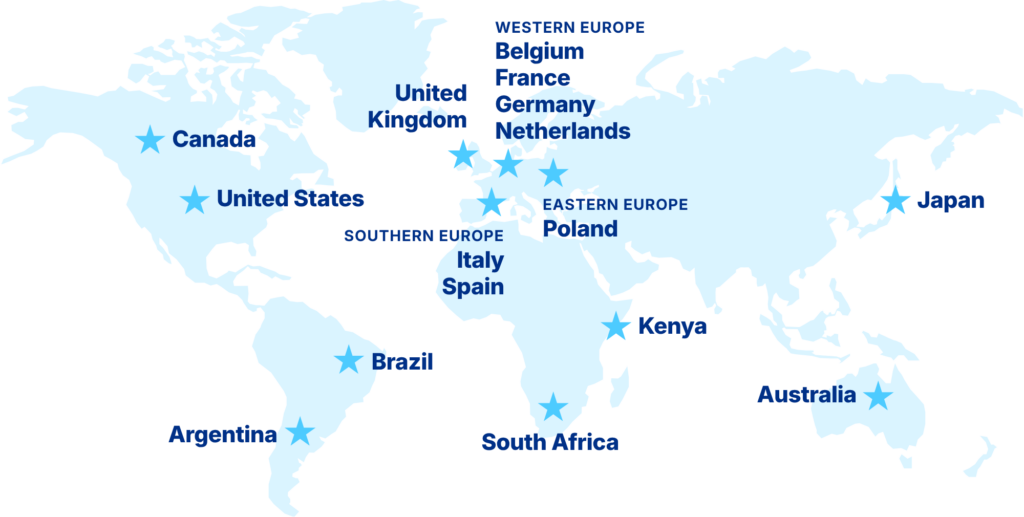
This initial phase draws on quantitative surveys of~15,000 youth ages 15–22 from 16 nations: Argentina, Australia, Belgium, Brazil, Canada, France, Germany, Italy, Japan, Netherlands, Poland, Spain, the United Kingdom, and the United States.
Phase Two: Qualitative
Releasing Spring 2027
The second phase is currently underway, conducting qualitative focus groups with young adults across six countries from the survey sample—Australia, Brazil, France, Nigeria, the United Kingdom, and the United States—to hear directly from youth about their lived experiences.
A First Look at Findings*
The State of Friendship Among Young People, Online and Off
The first phase of the Belonging by Design study culminates in a forthcoming research report (releasing November 2026) on how youth ages 15–22 across 16 countries build and maintain friendships, both online and in person. Drawing on global data surrounding connection and belonging, the report examines the prevalence and quality of different friendship types and their direct impact on loneliness and overall wellbeing.
Social media, messaging apps, and AI have changed where young people spend their time and how they connect. Which raises a question: do digital spaces help young people build meaningful friendships, or do they fall short of what in-person relationships provide?
Explore our preliminary insights and early findings below:
Kinds of friendships
How common each kind of friendship is, and how that varies by country, age, and gender
Friendship quality
How young people rate the quality of their friendships, and how they feel with each kind of friend
Where friendships form
Where online friendships start, and which platforms young people use to stay in touch
Life online and AI
What young people do online, and how they use AI, including as a social companion
Belonging and loneliness
How young people experience belonging online and off, and how they cope when they feel alone
Thriving
Which friendships, and which relationships with adults, are linked to young people thriving
KINDS OF FRIENDSHIPS
38%
of young people have both an in-person friend and a close friend they met in person but now keep up with mostly online.
32%
have all three types of friendship at once: in person, online only, and one that began in person and moved online.
WHERE ONLINE FRIENDSHIPS FORM
42%
of young men met their closest online-only friend through gaming.
57%
of young women met their closest online-only friend through social media or messaging platforms.
ONLINE EXPERIENCES BY AGE
56%
of 15–17 year olds feel they belong in at least one online community, compared with 44% of 18–22 year olds.
23%
of 15–17 year olds often feel angry at others online, compared with 34% of 18–22 year olds.
The early data indicate that young people who have a relationship with a trusted adult outside their family, such as a teacher, coach, or mentor, are more likely to be thriving. The picture gets more complicated when looking at other outcomes such as loneliness.
*Preliminary findings above are based on data from 14 of the study’s 16 countries. Data from Kenya and South Africa will be included in the November report. Figures may change in the final phase one report. Findings describe associations and do not show cause and effect.
Be the First to Read Reports from this Initiative
Sign up and we’ll email you when the full reports and key findings are released!
This form is from the Digital Wellness Lab at Boston Children’s Hospital. We’ll use your information to tell you about this report and the Lab’s work. We do not sell or share your information. Every email includes a link to unsubscribe. See our Privacy Policy.
More Resources
Looking for insights right now? Explore our archive of current Belonging research while we prepare our upcoming release.
-
Pulse Survey: Where Teens Find Belonging: Connection and Support in Online and Offline Spaces
Our survey of 1,598 U.S. adolescents reveals that online and offline belonging are deeply interconnected, and that digital spaces extend rather than replace in-person connection.
-
Young People’s Sense of Belonging Online
This research brief explores online community spaces on social media and gaming platforms, describing how online connections can be both positive and negative for young people.
-

Recommendations for Industry: Teens and AI
Recommendations for the tech industry based on findings from our Pulse Survey: Optimism and Uncertainty – How Teens View and Use Artificial Intelligence