




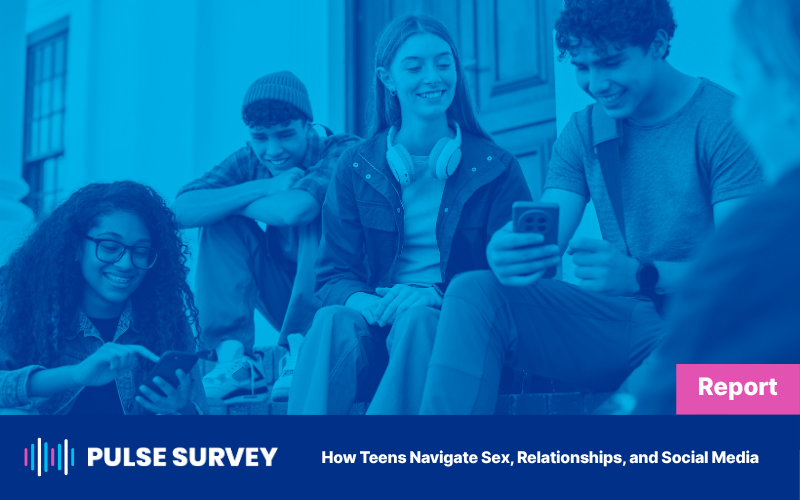
Relational and sexual exploration is a normative part of adolescence, but teens today are navigating and making sense of relationships and intimacy across both their online and offline environments. To gain a more holistic understanding of young people’s sexual health landscape, The Digital Wellness Lab at Boston Children’s Hospital, with support from the Aerosmith Endowment Fund, surveyed 1,124 US teens aged 16 to 18 between January and February 2026 regarding three interconnected dimensions: the social norms teens hold around sex and relationships, the state of their sexual health literacy and access to sex education, and the relationship and sexual content they encounter on social media.
Our findings reveal a consistent difference between how teens see their broader peer group and how they see their close friends: teens perceive their broader peer group as more sexually experienced, risk-inclined, and permissive in their attitudes compared to their close friends. When comparing gender differences, girls are more likely than boys to perceive their peers as sexually experienced and permissive and their close friends as more cautious. Teens generally report favorable attitudes toward safe sex, and most report that they have received some form of formal sex education; however, many have never discussed sexual health with a parent, guardian, or healthcare provider. To add, boys report less sexual health information and weaker safe-sex attitudes than girls. Overall exposure to relationship and sexual content on social media is moderate-to-low overall, and teens report that what they encounter online largely come from algorithmic recommendations rather than the content creators they actively follow.
To better support adolescents, we need a collaborative and multi-dimensional approach that strengthens accurate sexual health education, facilitates more open dialogue with trusted figures, tackles misperceptions about peer behavior, and equips young people with the ability to critically think about the relational and sexual content they see online.