




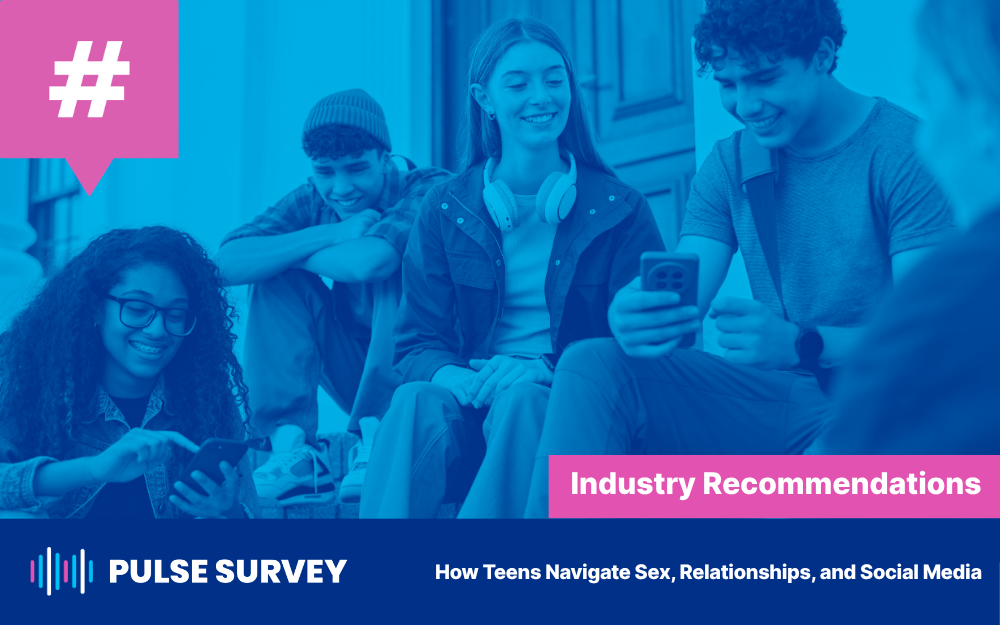
Based on findings from our latest Pulse Survey examining how teenagers navigate sex, relationships, and social media, these industry recommendations outline actionable steps for social media platforms to foster safer, healthier, and more age-appropriate digital environments. By enhancing algorithmic support for authoritative sources, improving user agency, and refining content classification, platforms can better empower youth and protect their wellbeing online.
- Design so that authoritative information can reach teens through existing channels. Platforms should proactively surface authoritative sexual health information via algorithms, matching how explicit or sensational content is currently recommended.
- Consider authoritative creator labeling for sexual and reproductive health, defined with the field. An authoritative creator labeling system for sexual and reproductive health educators, co-designed with researchers and content creators, would help teens identify trusted sources amid diverse content.
- Give teens simple tools to shape what they see. Platforms could give teens more influence over their own feeds, such as community notes or “not interested” options for sexual health content, enhancing user agency and reducing harmful content exposure. Reporting and blocking features should be redesigned to provide teens with clear feedback, avoiding opaque “black box” processes.
- Separate “sexual health” from “sexual content” classifiers to limit suppression of high-quality content. Platforms should distinguish between educational content and sexually explicit content in classification systems, avoiding suppression of credible health information. Creators of sexual health content should have access to trained human reviewers for appeals.
For questions about these findings and recommendations, please email us.