2025 Impact Report
Amplifying Youth Voices
RESEARCH
INITIATIVES & RESOURCES
TEAM & SUPPORTERS
GET INVOLVED
LOOKING AHEAD
Beyond the Headlines: What Kids Need in Today’s Digital World


A message from our Founder & Director, Michael Rich and Executive Director, Cori Stott
We’ve always believed that building a healthier digital world for young people starts with hearing from them directly. In 2025, we deepened that commitment. Here’s what we learned.



What Young People Are Saying
In 2025, we surveyed thousands of teens across the United States about school phone policies, and about their sense of belonging, both online and off. We learned that young people are navigating digital life with more intention than they often get credit for. They recognize when their phone use is getting in the way of important aspects of their lives, and many are already taking steps to manage it. They value their online friendships alongside, rather than instead of, their offline ones. They have clear opinions on the rules that affect them and are more likely to see rules as fair when they are included in decision-making—yet most report having little input. The data tell us a clear story that young people are essential partners in building a healthier digital future.
63%
of teens say they use their phones “a little too much” or “way too much”
[Schwamm et al., 2025]
47%
of high school students are independently using tools or apps to manage their phone use
[Schwamm et al., 2025]
65%
of high school students who helped design their school’s phone policy said the rules were reasonable
[Schwamm et al., 2025]
54%
of teens interact frequently with offline friends on social media.
[Chidekel et al., 2025]
77%
of teens feel connected to others when using messaging or video chat
[Chidekel et al., 2025]
67%
of teens agree that their friends online are just as important as friends they know in person
[Chidekel et al., 2025]
Research
Following the Science
At the Digital Wellness Lab, we believe that building a healthier digital ecosystem for young people and families starts with science. Our research examines how digital experiences, from social media to video games to artificial intelligence, affect the mental, social, and emotional wellbeing of youth. We investigate these impacts through rigorous, multidisciplinary research designed to inform a digital ecosystem that supports young people’s holistic health and development.
Our Long-Form Research, our Research Briefs, and our Pulse Surveys, address key questions shaping this generation’s relationship with technology. Can online spaces strengthen offline relationships? How do young people use AI and gaming spaces for creativity and connection? In what ways do social media influence body image, identity, and engagement with the world?
As an independent lab, we collaborate with other leading experts—and young people themselves—to generate insights that drive real-world change. This year, our research on children’s use of generative AI was cited in Senate testimony calling for clearer, developmentally informed guidelines for AI design.
Young people are already engaging with AI in ways that shape their development and wellbeing. Policy and product design must catch up, and our research is helping to ensure that response is grounded in evidence and centered on what young people need to thrive.
MAY 2025
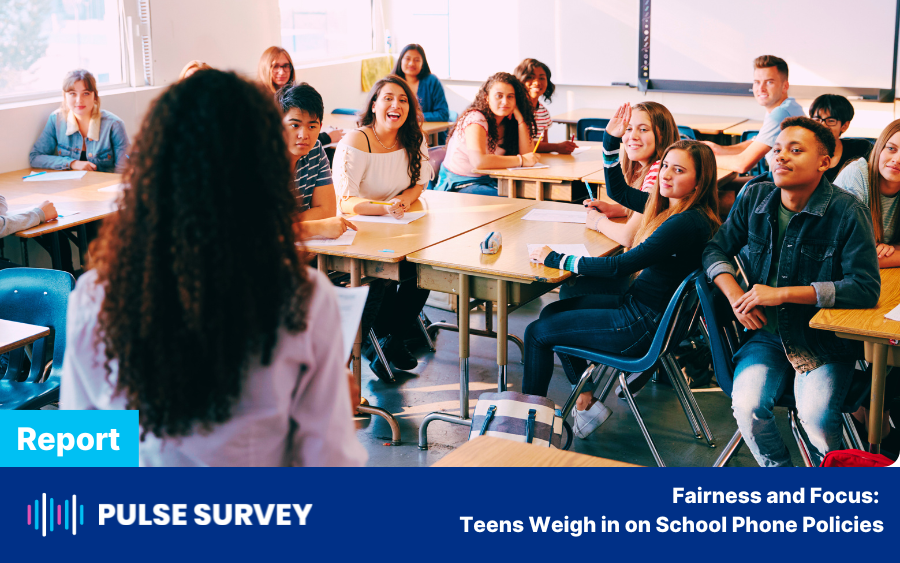
Pulse Survey: Fairness and Focus—Teens Weigh in on School Phone Policies
This report explores how more than 1,500 teens (ages 13–18) from across the U.S. experience school phone policies. The findings reveal that while many students agree phones can be a distraction at school, they also use them as tools and engage with opportunities for self-regulation. When students are involved in shaping these policies, they are more likely to see the rules as fair and are more willing to follow them.
DEC 2025
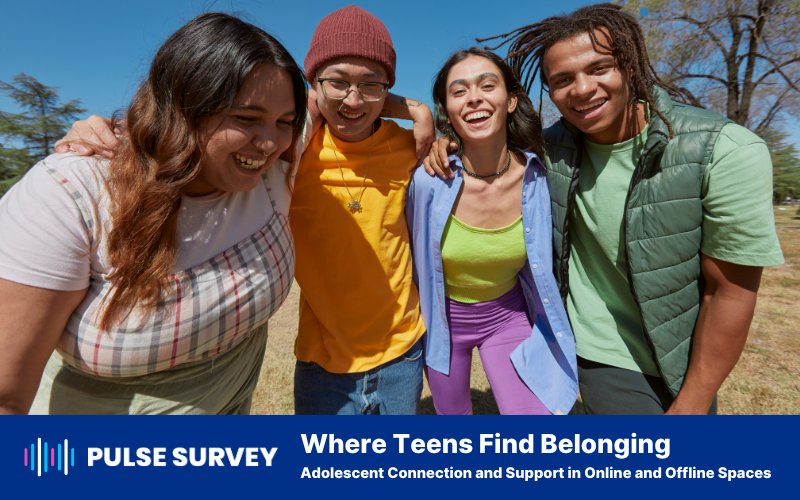
Pulse Survey: Where Teens Find Belonging—Connection and Support in Online and Offline Spaces
This report examines how teens experience belonging across their online and offline lives. We surveyed nearly 1,600 U.S. adolescents ages 13-17 to understand their sources of connection and support, the role of online friendships in their social lives, and how belonging differs across digital platforms. Many teens report that online spaces can offer meaningful connection and support, particularly for those who may feel less belonging offline.
JUL 2025
White Paper: Leveraging Interactive Media to Foster Social-Emotional Learning for Youth
Conducted in collaboration with the Education Development Center, this report explores how the platforms young people already use every day—social media, gaming, and streaming—can be intentionally designed to support social and emotional learning, expanding access to these critical developmental opportunities.
Jan 2025
Research Brief: The Online Experiences of LGBTQ+ Youth
This brief captures current research exploring the online experiences of LGBTQ+ youth, including benefits, risks, and the need for thoughtfully tailored digital spaces to support their mental health and safety.
Apr 2025
Research Brief: Digital Media and Technology for Social-Emotional Learning
This research brief explores the ways that social-emotional learning (SEL) approaches show up in online and media spaces, and the developmental opportunities these digital learning experiences may provide to children and teens.
Aug 2025
Research Brief: Young People, Content Effects, and Current Content Moderation Practices
This research brief reviews how young people access certain concerning types of online content (sexual content), how young people respond to harmful content, and youth viewpoints on content moderation practices.
ONGOING
Social Gaming Experiences of Young People
This study, conducted in collaboration with the University of Michigan and the University of Washington, focuses on the gameplay experiences, conceptualizations, emotional drivers, and decision-making processes of children and teens (ages 8-14) who play online multiplayer games such as Roblox, Minecraft, and Fortnite.
ONGOING
Understanding How Social Media Impact Young Adolescents
This study, conducted in collaboration with Wellesley College, sheds light on key components of young teens’ (aged 13-15) social media ecology and offers proof-of-concept of the multi-method approach needed to enable funding to include larger, more geographically dispersed adolescent samples.
Gaps in access, knowledge, and the potential for developing ethical guidelines to help youth navigate AI responsibly.
ONGOING
Investigating Commonalities Among Kids Experiencing PIMU
Conducted in collaboration with the Clinic for Interactive Media and Internet Disorders (CIMAID), this project analyzes clinical charts from previous and current patients to identify key risk factors and commonalities among patients experiencing problematic media use.
ONGOING
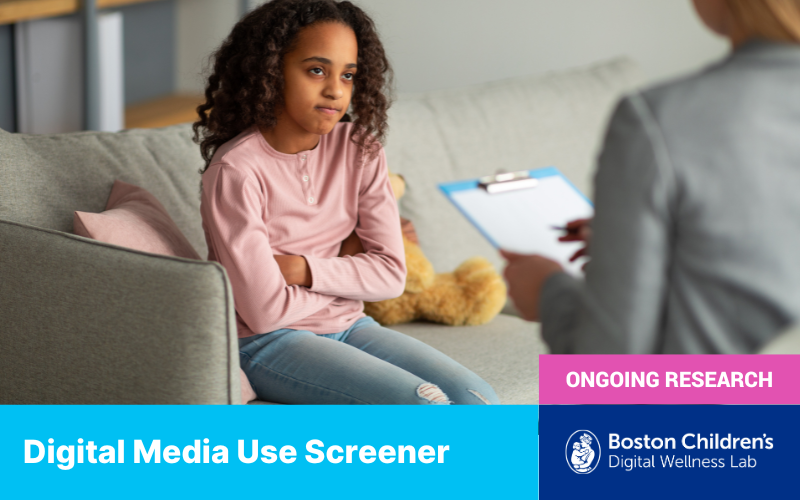
Developing a Tool to Assess Digital Media’s Impact on Youth
In an effort to support early intervention and care for problematic media use, this project is developing and validating a digital media use screener and brief intervention to support clinicians in assessing and addressing the role of technology and media in their patients’ lives. Latent Class Analysis has confirmed the screener’s strong sensitivity (78%) for detecting high-risk patterns, giving clinicians a reliable, non-pathologizing way to guide teens toward better outcomes.
ONGOING
Studying which Social Media Behaviors Promote Wellbeing
Led by Dr. Laura Marciano of Indiana University, the HappyB2.0 study is a multi-method research project seeking to define which specific online social experiences support adolescent wellbeing, and the ways in which different types of interactions online and in the physical world relate to outcomes of human thriving.
ONGOING
Developing Actionable AI Guidelines for Early Childhood
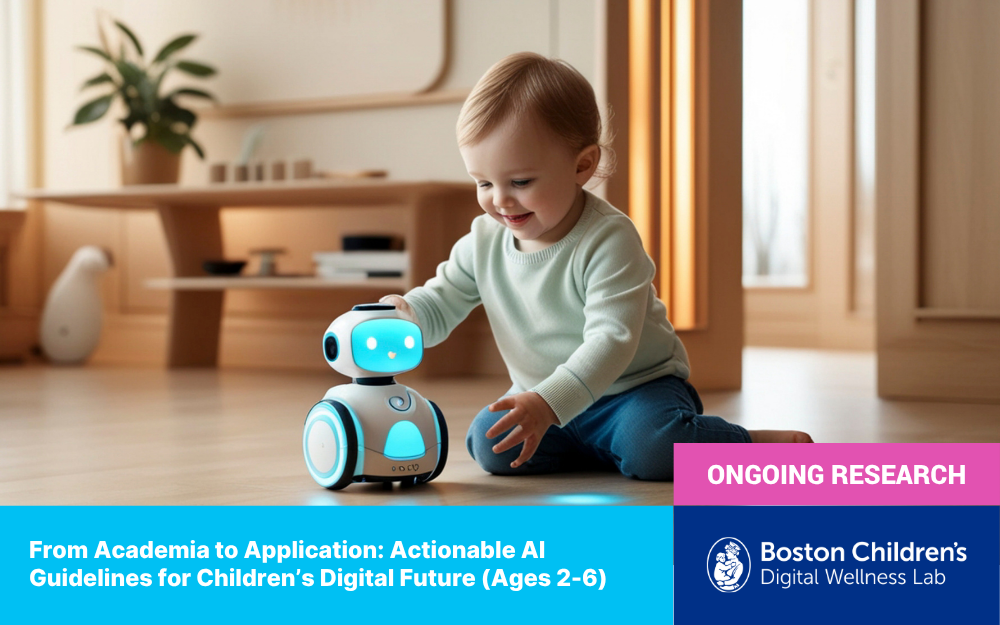
This project bridges the gap between large-scale policy frameworks, academic insights, and real-world AI product development needs for early childhood uses. By identifying, refining, and translating the most relevant recommendations into developmentally optimal guidelines, we will produce an accessible tool for designers to ensure AI-enabled products are built with children’s developmental needs and wellbeing at the fore.
ONGOING
Global Perspectives on Teens’ Use of AI Chatbots
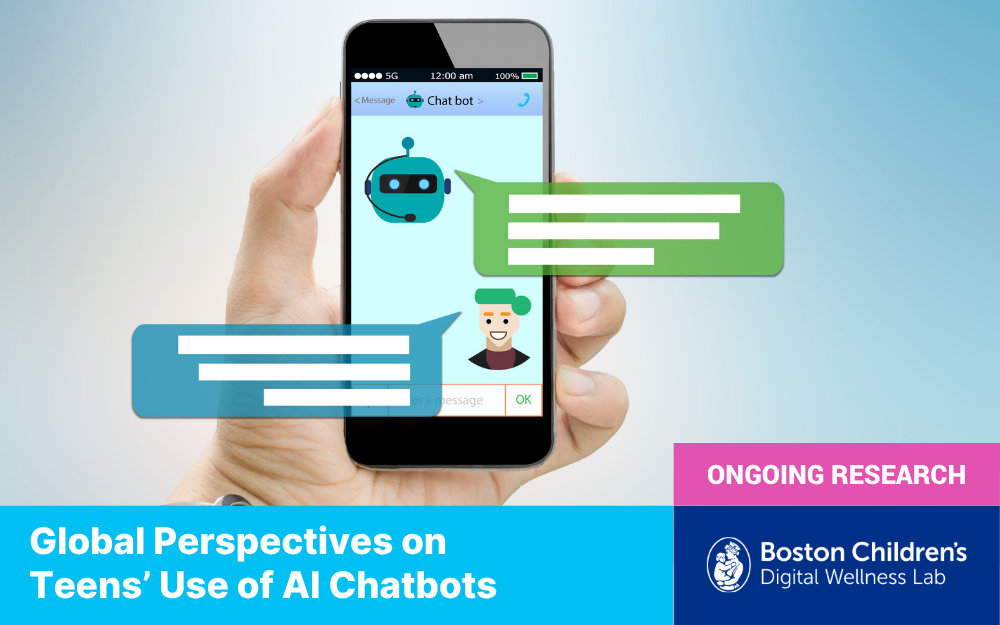
This survey captures a uniquely global perspective on how young people are engaging with AI. Drawing on responses from teenagers in the United States, Brazil, and France, this survey explores how adolescents are using AI chatbots for learning, creativity, advice, and social support, while also examining their broader attitudes toward the technology and its perceived impact on their lives. By spanning multiple cultural contexts, the study offers a richer, more nuanced understanding of emerging patterns in youth AI use worldwide. Further analysis will examine how key factors, such as gender and frequency of use, help explain differences in how young people engage with and perceive AI, shedding light on important variations within this global landscape.
ONGOING
Social Media, Influencer Engagement, and Implications for HIV/STI Prevention
This research project examines whether adolescents’ social media use and engagement with content creators are associated with perceived norms, attitudes, intentions, and behaviors related to unprotected and casual sex. By focusing on the powerful role influencers play in shaping what young people see as typical, acceptable, and desirable, this study offers critical insight into how digital environments may be influencing real-world health decisions. The findings have the potential to inform more effective, youth-centered HIV/STI prevention strategies that meet adolescents where they are.
ONGOING
Tailoring Conversational AI Support-Styles for Parents Navigating Adolescents’ Screen Media: A Randomized Controlled Trial
This study tests whether a brief interaction with a purpose-built chatbot can provide meaningful, real-time support to parents who are concerned about their teenager’s screen media use. By evaluating different conversational support styles, the research explores how AI can be designed to offer guidance that is not only accessible, but also responsive to the complexities of family dynamics. Findings will help inform the development of scalable, hospital-integrated digital tools that extend trusted support beyond the clinical environment, equipping families with practical strategies in the moments they need them most.
“The Amplify Youth Summit brought the principles of the Inspired Internet Pledge to life through a youth lens. We saw first-hand the alchemy of our investment in partners like the Digital Wellness Lab as students from different walks of life sat at the same tables and shared their ideas and experiences directly with tech companies as trusted partners.”
WENDY MATHENY, Head of Advocacy at Pinterest
Initiatives & Resources
Turning Research Into Action
Through our initiatives and original resources, we turn insights into meaningful, real-world impacts. In 2025, we launched Amplify Youth, expanding our commitment to elevating young people’s voices and ensuring their experiences shape the future of digital environments. We advanced collaborative efforts like the Inspired Internet Pledge, the Youth & Interactive Media Coalition, and the Digital Wellness Student Advisory Council, strengthening a growing network dedicated to youth wellbeing. We also continued translating research into practical, accessible tools for families, educators, and clinicians, while equipping industry leaders with evidence-informed guidance to design digital experiences that are safer and healthier for young people.
Initiatives
In Year 2, the Inspired Internet Pledge grew to 65+ Signatories and Advisors. We hosted four researcher roundtables, launched the inaugural Amplify Youth Summit with 110+ attendees, and collectively reached millions of youth, caregivers and policymakers through events, publications, resources, new products, collaborations, and innovations by member organizations.
Now in its fifth year, our Student Advisory Council brought together 17 high school students, and five returning student mentors in the 2025-2026 school year, to discuss a variety of timely topics, including belonging and sense of community, the role of AI in today’s digital age, global policy and advocacy, the realities of tech and media reliance, and young people’s mental health.
The Amplify Youth initiative represents a forward-looking approach to digital wellness education that places young people at the center of the conversation. By working directly with youth, families, and educators, we recognize that lasting change requires both empowering young people with agency and strengthening the systems that shape their daily experiences. Through hands-on workshops, we are cultivating a growing movement that positions youth not as passive recipients, but as active partners in designing healthier, more supportive digital environments for themselves and for the generations that follow.
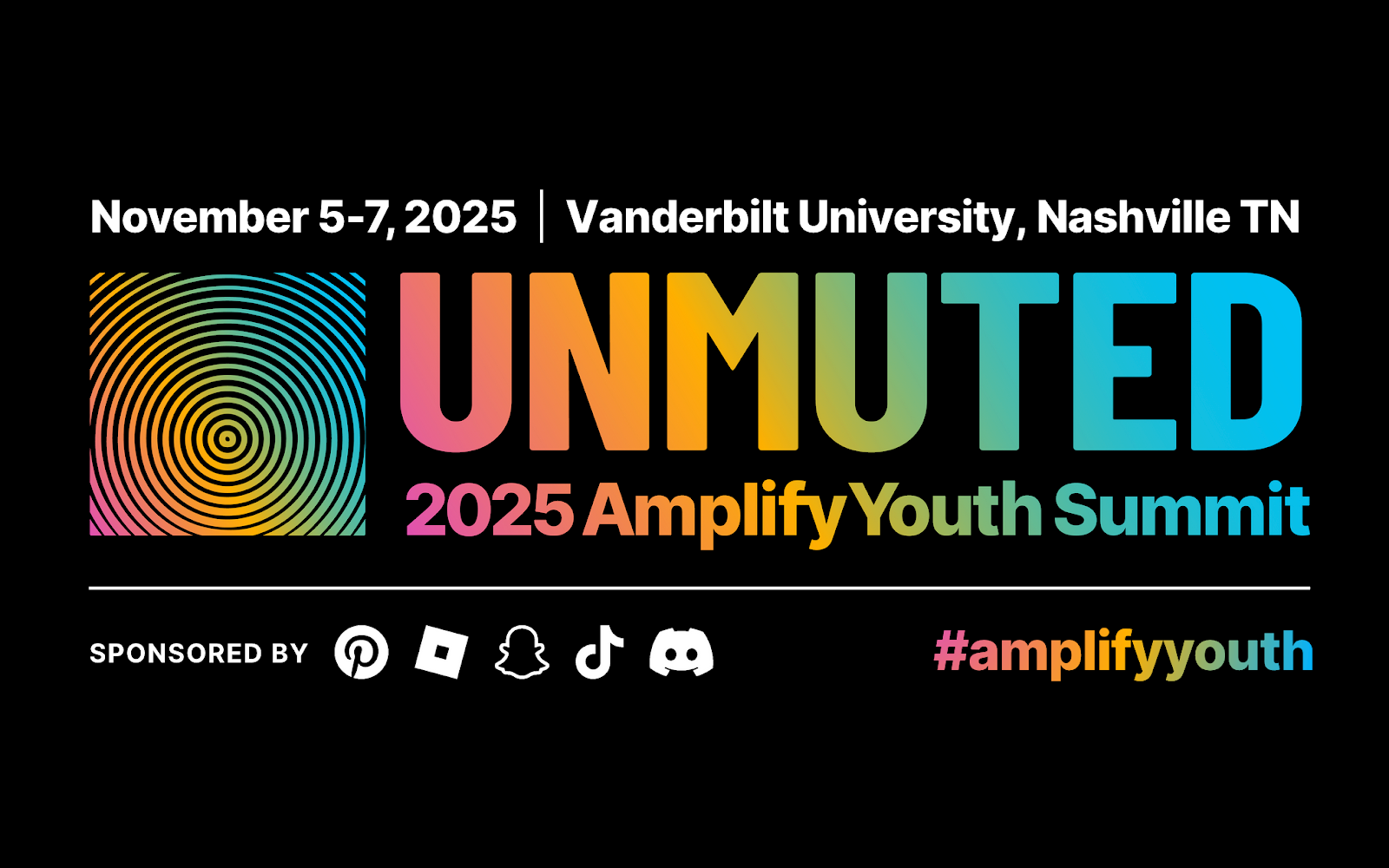
The inaugural UnMuted Amplify Youth Summit in Nashville brought together more than 50 teens and young adults from across the United States and Canada, along with non-profit teams, parents, and industry leaders for a series of interactive workshops and sessions dedicated to understanding the approaches needed to support mental, social, and emotional health in the online spaces where the next generation lives, learns, and connects. Co-hosted by the Digital Wellness Lab and NAMLE at Vanderbilt University—and supported by sponsors including Pinterest, Roblox, Snap, TikTok, and Discord—the event fostered a unique and energetic collaborative environment.
The Youth & Interactive Media Coalition (YIMC) continues to facilitate information sharing and collective amplification of efforts across the Harvard ecosystem, aiming to advance progress on issues impacting youth in the digital age. This group was instrumental in designing and facilitating the summer AI guidelines workshop at the Harvard-Radcliffe Institute.
Resources
RESOURCE
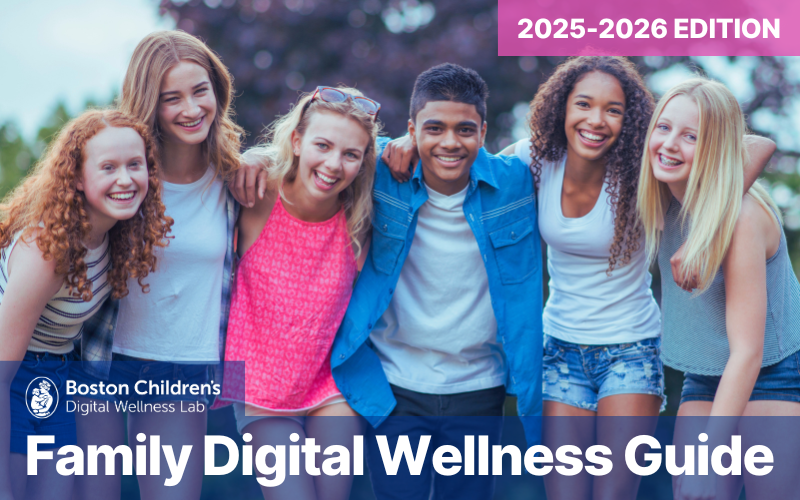
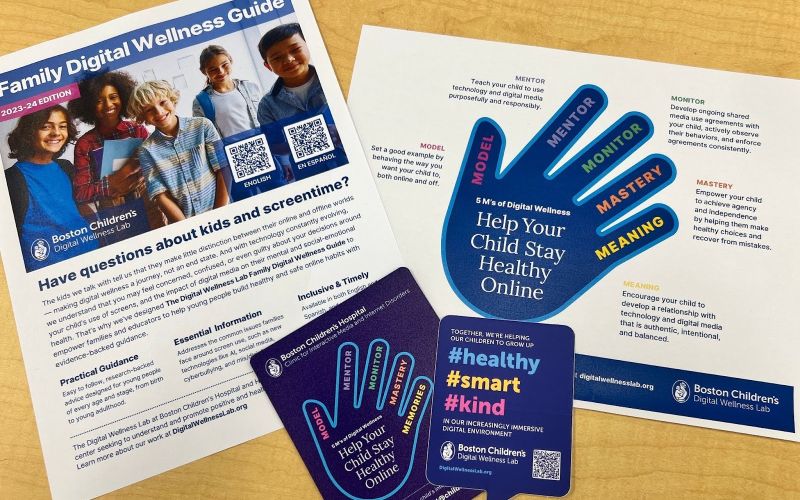
Family Digital Wellness Guide
We updated our comprehensive, evidence-based resource designed to help families raise healthy, smart, and kind kids in the digital age. The Family Digital Wellness Guide has been newly reorganized by our 5 M’s of Digital Wellness framework: Model, Mentor, Monitor, Mastery, and Meaning. This structure makes it easier than ever to find actionable strategies tailored to your family’s needs, whether you’re setting boundaries for a curious toddler, helping a middle schooler navigate social media, or supporting your teen’s relationship with AI.
RESOURCE
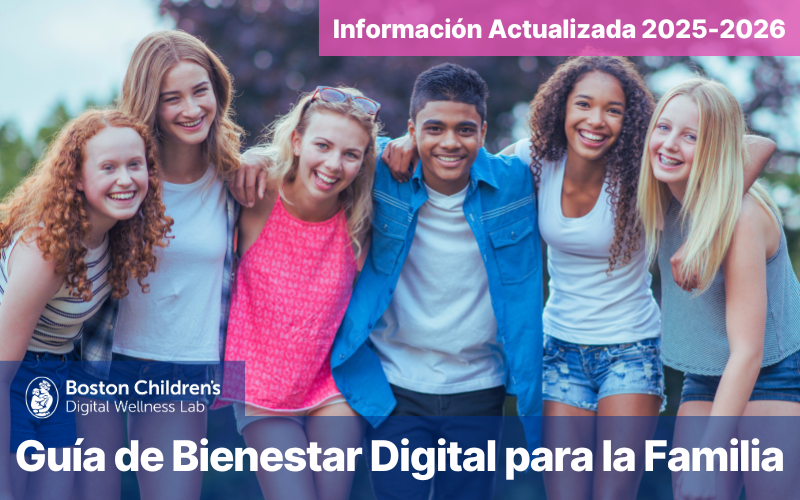
Guía de Bienestar Digital para la Familia
La Guía de Bienestar Digital Familiar ha sido reorganizada recientemente bajo nuestro marco de Las 5 M del Bienestar Digital: Modelar (Model), Mentorear (Mentor), Monitorear (Monitor), Maestría (Mastery) y Significado (Meaning).Esta estructura hace que sea más fácil que nunca encontrar estrategias prácticas adaptadas a las necesidades de su familia, ya sea que esté estableciendo límites para un niño pequeño y curioso, ayudando a un estudiante de secundaria a navegar por las redes sociales o apoyando la relación de su hijo adolescente con la inteligencia artificial.
RESOURCE
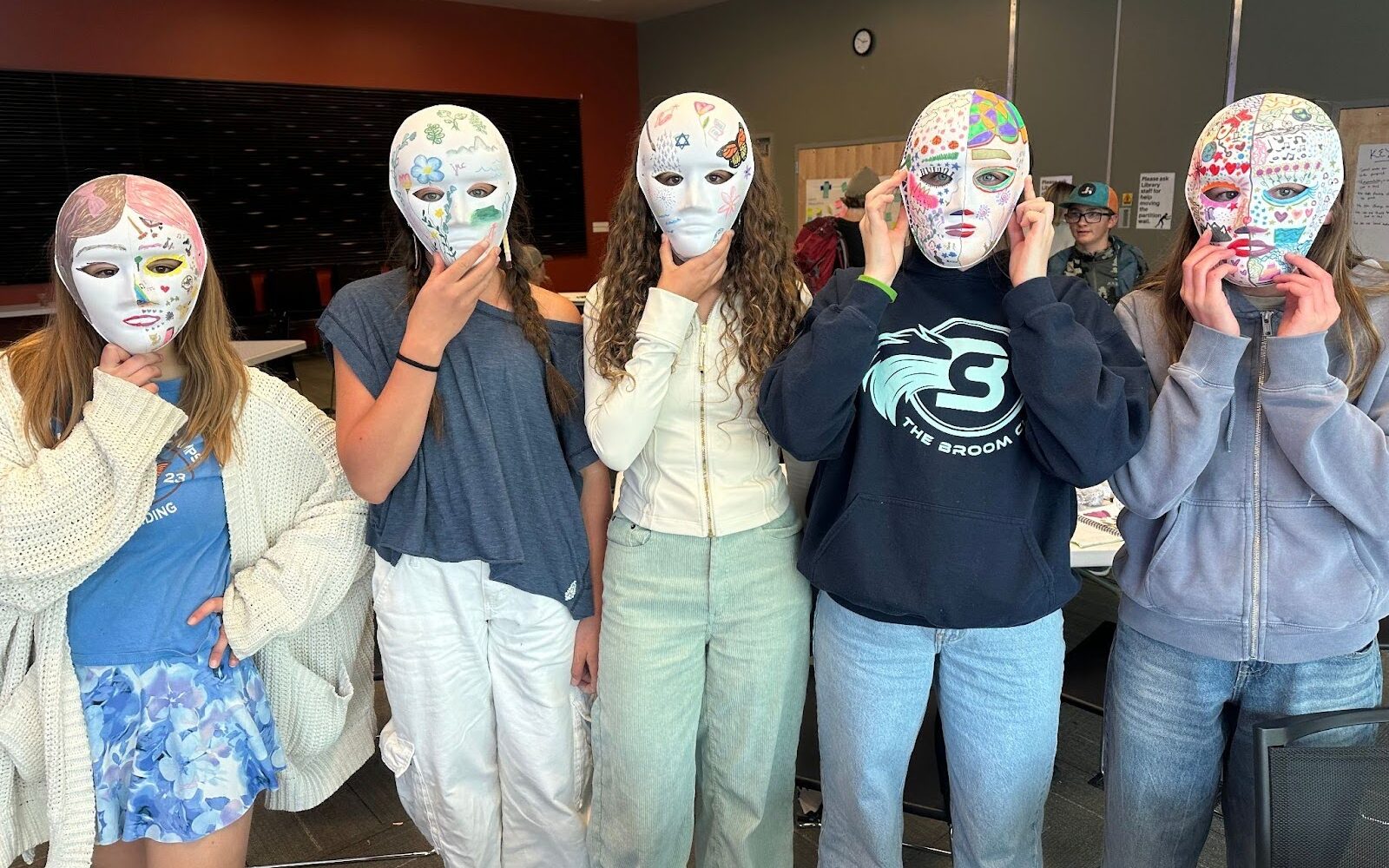
Amplify Youth Workshops
Our interactive workshops take an “all-community” approach–bringing together young people, parents and caregivers, educators, clinicians, and others to deliver evidence-based digital wellness workshops. Our goal is to equip youth and their communities with practical skills for mindful tech use and digital wellness, while creating meaningful opportunities for them to share their insights and experiences with technology.
RESOURCE
Teen Voices Blog Series
We’re fortunate to work with engaged high school students from around the country in diving deeply into how their personal experiences can inform healthier online spaces. Students are invited to share their perspectives on how digital and social media impact mental, physical, and social health in our Teen Voices blog series. In 2025, we added five new essays from members of our Student Advisory Council, adding nuance to our collective understanding of what it’s like to grow up in the digital age.
RESOURCE
Fellow Travelers Blog Series
Creating a healthier digital experience requires collaboration. No single organization can tackle this challenge alone. In 2025, we added nine new profiles to our Fellow Travelers blog series highlighting experts in digital wellness from around the world, sharing their diverse perspectives and expertise to support young people and their families.
RESOURCE
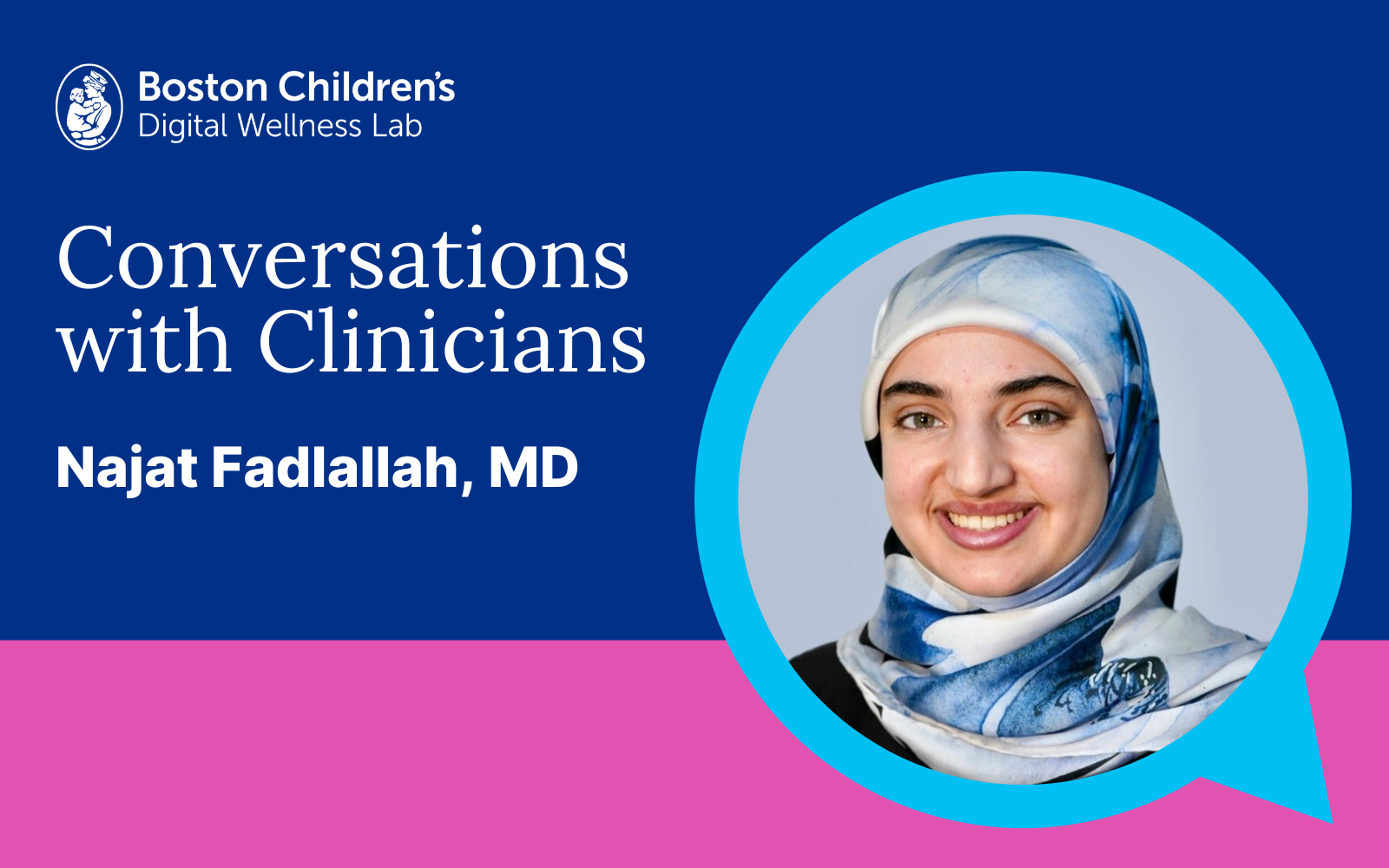
Conversations With Clinicians Blog Series
Being part of Boston Children’s Hospital and Harvard Medical School provides the Lab with unique access to the knowledge and insights of world renowned pediatric health experts. In 2025, we added seven new profiles to our blog series, Conversations with Clinicians, exploring our colleagues’ insights on care strategies and ideas for improving the digital ecosystem to better support and protect young users.
RESOURCE
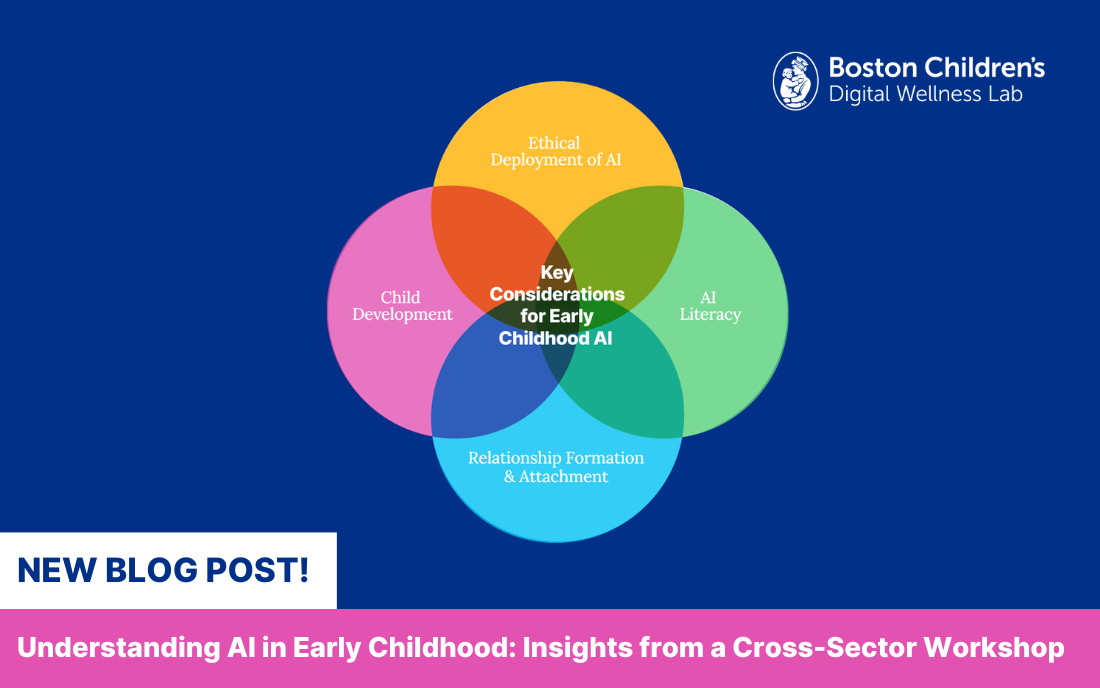
Understanding AI in Early Childhood
Over the summer, we convened a focused roundtable of experts in technology design, child development, and research to assess existing guidance for healthy AI development and pinpoint where it falls short. Explore how AI-enabled interactions are shaping how young children learn, play, and make sense of the world—and what product teams, educators, and policymakers need to understand now to build a healthier, more thoughtful digital future.

RESOURCE
O Guia do Midiatra
In 2024, Dr. Rich released his evidence-based book for parents and educators— and we are happy to share that it has been newly translated into Portuguese! This translation is a pivotal step in ensuring that more caregivers around the world have essential research-backed guidance for navigating their children’s digital lives. The book offers a positive, “whole-child” approach and practical guidance for raising children in the digital age.
RESOURCE
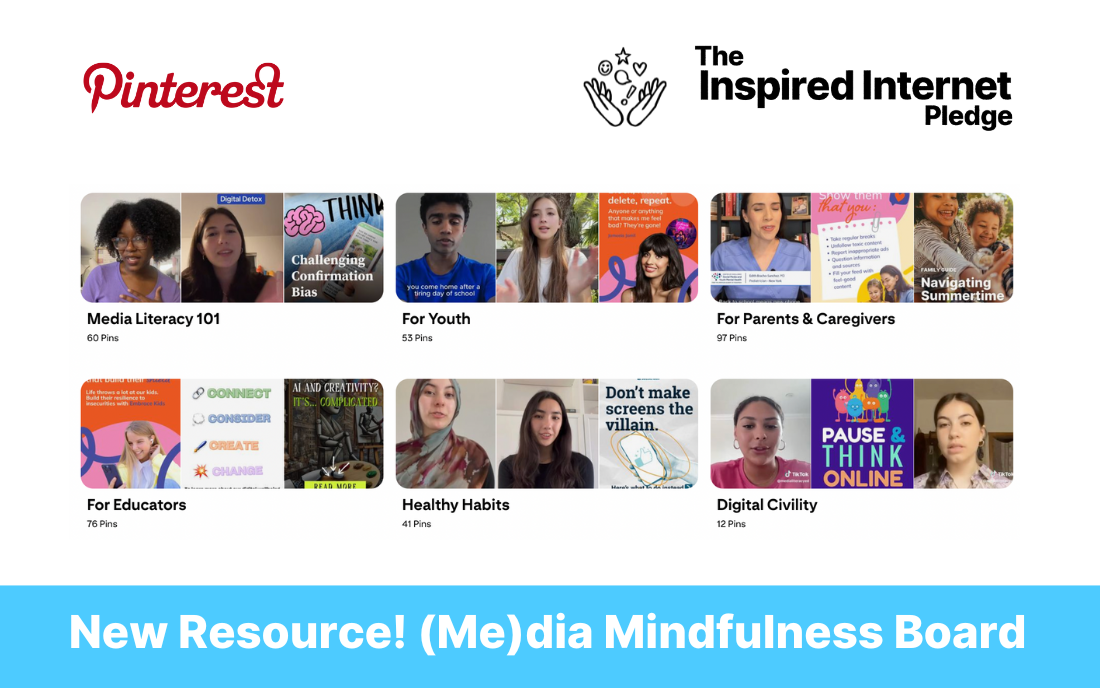
(Me)dia Mindfulness Pinboard
This cross-organizational collaboration brings together trusted partners to create an accessible, centralized resource for youth, parents and caregivers, and educators navigating an increasingly complex digital world. The board features more than 500 curated pins from 14 organizations, organized into six key areas spanning media literacy, digital civility, and healthy habits. Designed to broaden reach and deepen impact, this resource helps young people and the adults who support them evaluate information more effectively, shape digital experiences that are intentional and balanced, and take action from a place of informed empowerment.
Publications, Presentations & Press
Sharing What We’ve Learned
In 2025, the Lab’s work reached audiences around the world — published in leading academic journals and featured across major media outlets — helping to shape public understanding of how technology is influencing young people’s lives. Our team shared insights at more than 55 conferences and events globally, engaging diverse audiences on topics ranging from school phone policies to AI and youth mental health. Through publications, manuscripts, press, and presentations, we continued to close the gap between research and real-world impact, sparking dialogue and driving action among policymakers, educators, clinicians, industry leaders, and families committed to advancing digital wellness.
Selected Press
 How parents can make sure their children are making safe screen time choices
CBS News – Jan 2025
 A Tech Rule That Will ‘Future-Proof’ Your Kids
The Atlantic – Aug 2025
 Some high schoolers say a school cell phone ban boosted grades and connections. Others raise concerns about safety.
Boston Globe – Aug 2025
 How to Help Your Teen Handle Their New School Phone Policy
Psychology Today – Aug 2025
 This counterintuitive advice about kids and phones makes a lot of sense
Vox – Sept 2025
 How Video Games Are Shaping a Generation of Boys, for Better and Worse
New York Times – Oct 2025
Selected Videos & Podcasts
5 tips for raising healthier, screen-balanced kids according to the ‘media-trician’
Boston Globe – Mar 2025
 How to Raise Healthy Kids in a Screen-Saturated World
Nourished with Nora – May 2025
 How to promote kids’ digital wellness
Talking About Kids – Jun 2025
 Approaching screen time with nuance
KPBS – Jun 2025
 Special Edition: Phones in School Debate – Policies, Impact & What’s Next
The Newsworthy podcast – Aug 2025
 The Ultimate Parent ProTech Holiday Gift Guide: Safe Tech (and Non-Tech) for Families
Parent ProTech – Nov 2025
“Young people were born into the era of technology, which means we bring an instinctive, lived understanding of how digital spaces shape daily life. Soon, we will step into high-impact roles across technology, policy, and society, and meaningful inclusion now ensures that the systems we build tomorrow are ethical, informed, and human-centered.”
MARCELINA | College Student and UnMuted Youth Participant
Presentations
FEB 2025 | NEW YORK, NY
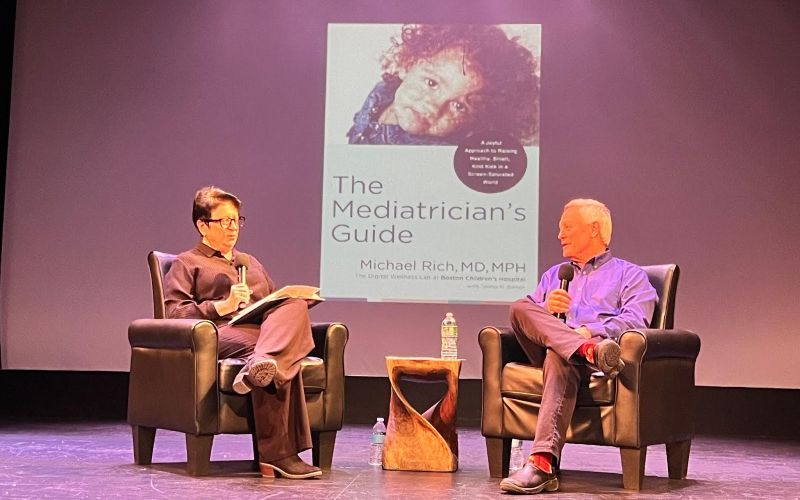
Screen Time & Digital Wellbeing at West Side YMCA
The Joan Ganz Cooney Center at Sesame Workshop hosted a fireside chat with Dr. Michael Rich and Dr. Rosemarie Truglio. During this interactive session, Dr. Rich shared practical strategies and research-based insights into how parents can guide their children toward balanced and mindful media use, drawing tips from his book The Mediatrician’s Guide: A Joyful Approach to Raising Healthy, Smart, Kind Kids in a Screen-Saturated World.
FEB 2025 | BOSTON, MA
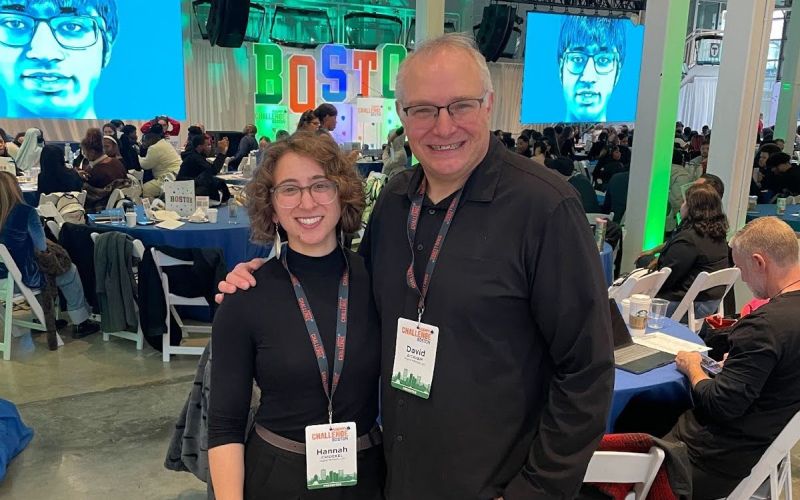
The Aspen Challenge for Young Bostonians
The Lab teamed up with the Aspen Challenge, an initiative of the Aspen Institute, to engage students across Boston Public Schools working to tackle some of today’s most pressing challenges. Dr. David Bickham and Hannah Chidekel were on hand to issue a challenge directly to students: design an innovative approach that empowers young people to counteract social media messages that glamorize or encourage substance use.

MAR 2025 | PEARL, MS
Keynote for Children’s Foundation of Mississippi
At the Foundation’s annual summit, Heart to Hearts: Conversations on the Changing Landscape of Childhood, Dr. Rich delivered a presentation on the evolving challenges and opportunities facing children in today’s digitally saturated world, building on the release of the 2025 Mississippi KIDS COUNT Report. Through a series of engaging breakout workshops, these discussions provided valuable insights and actionable strategies to better support children’s health and development.
MAR 2025 | BALTIMORE, MD
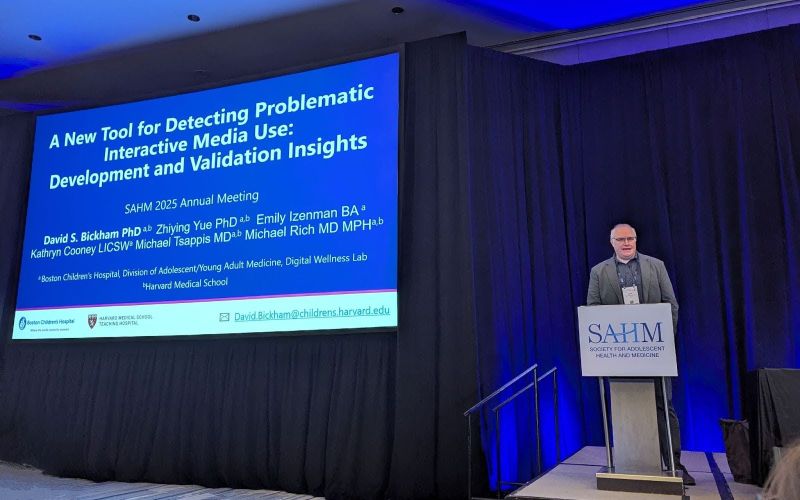
Society for Adolescent Health & Medicine (SAHM) Annual Meeting
Joining our global colleagues in adolescent medicine, Dr. Zhiying (Zoey) Yue presented a session titled Gaming Alone Together: The Role of Loneliness and Social Anxiety in Adolescent Video Gaming Behaviors, and Dr. Bickham unveiled the Lab’s innovative new PIMU screener in a presentation titled A New Tool for Detecting Problematic Interactive Media Use in Adolescents: Development and Validation Insights.

MAR 2025 | NEW YORK, NY
Verizon Digital Wellness Summit
Dr. Keneisha Sinclair-McBride, Lab colleague and contributor, took the stage to talk about something on all of our minds: how social media and screen time are shaping young people’s mental health. Her key message? It’s all about balance. While digital spaces offer connection, learning, and fun, they also come with challenges—cyberbullying, hate speech, and algorithms designed to keep users stuck scrolling.
APR 2025 | BOSTON, MA
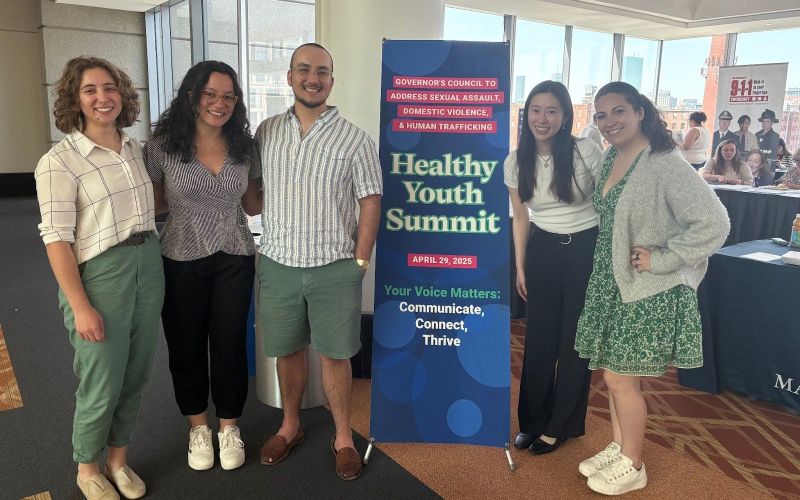
Massachusetts Governor’s Healthy Youth Summit
Hannah Chidekel, Nicole Powell, Dr. Michael Carter, Katrina Ho, and Kaitlin Tiches attended the Massachusetts Governor’s Healthy Youth Summit to help develop practical tools for high school students to build healthy relationships both online and offline. This important event brought together youth leaders with local youth-focused organizations and Lieutenant Governor Kim Driscoll to foster skills that strengthen connections with peers, family members, and communities.
APR 2025 | VIRTUAL
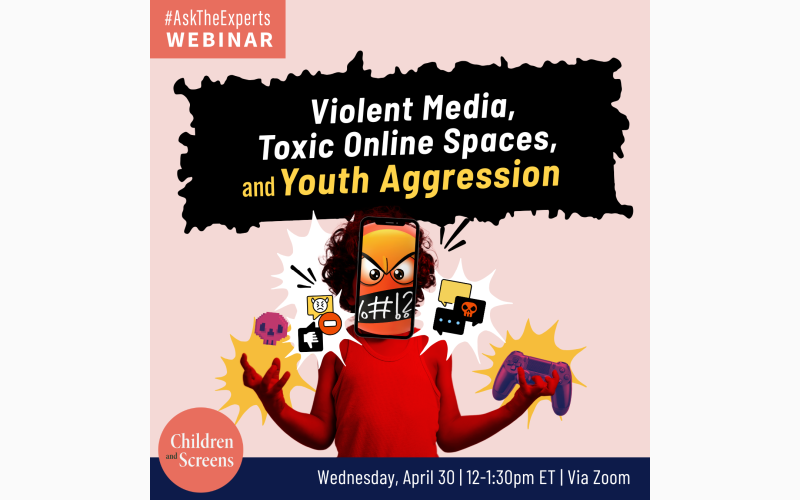
Children and Screens: Ask the Experts Webinar
What is the link between digital media exposure and aggressive behavior in youth? Dr. Rich moderated a webinar titled “Violent Media, Toxic Online Spaces, and Youth Aggression,” featuring leading experts in media, child development, and online behavior. Panelists explored how and where children encounter harmful content, what the research says about impacts on youth development, and what parents and caregivers can do to protect and empower their kids in today’s digital landscape.
APR 2025 | VIRTUAL
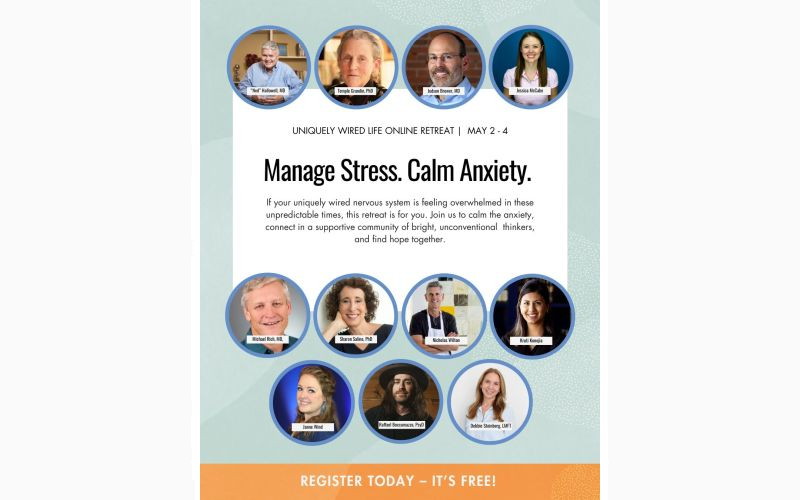
Uniquely Wired Life Online Retreat
Research shows that when your brain experiences constant scanning or overwhelm, it reflects a need for systems better aligned with your unique neurological functioning. Dr. Rich served as a distinguished speaker at the Uniquely Wired Life Online Retreat, designed for adults navigating ADHD, anxiety, autism, dyslexia, or executive function challenges. Participants gained research-informed strategies to reduce nervous system overload, build executive function capabilities, and harmonize daily routines with natural brain processing patterns.
APR 2025 | YOKOHOMA, JAPAN
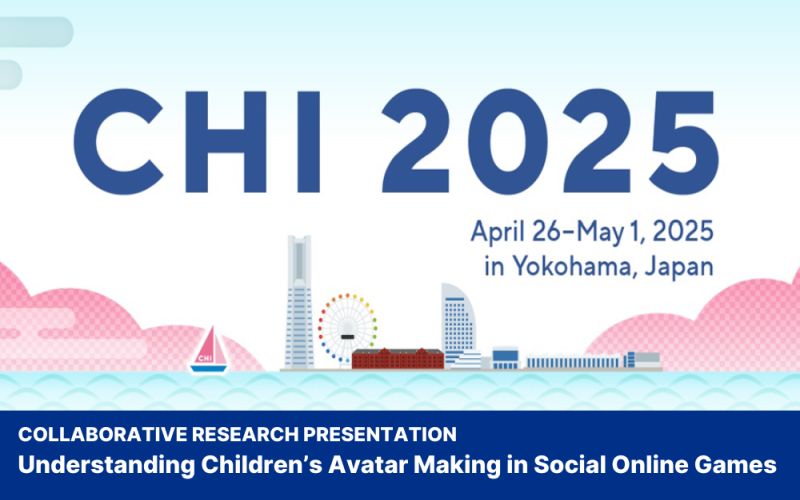
Children’s Avatar Creation in Online Games
Our research on “Understanding Children’s Avatar Making in Social Online Games” was presented by Chris (Yue) Fu from our collaborative partner team. This joint study between the Digital Wellness Lab, the University of Michigan, and the University of Washington explores how young people use in-game avatars to express themselves and explore different identities. One key takeaway for parents and designers: the research highlights the importance of discussing external pressures (like the stigma of “default” skins) and providing diverse, accessible customization options that support healthy identity development without promoting overconsumption.
MAY 2025 | PITTSBURGH, PA
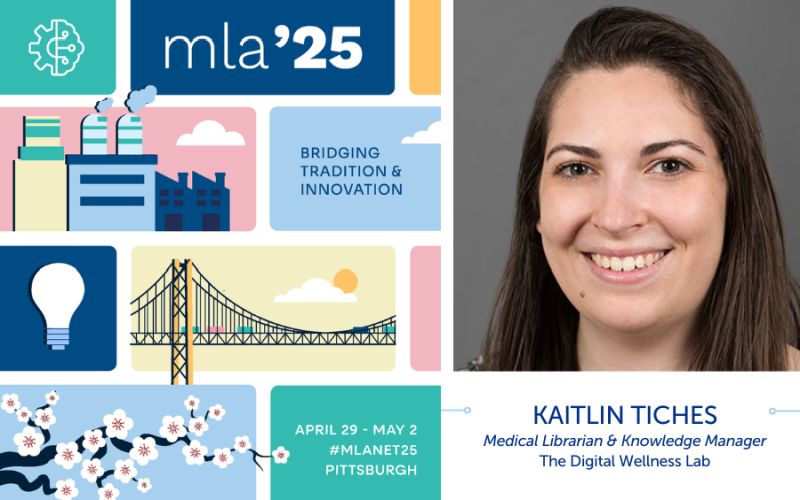
Medical Library Association Conference
Medical Librarian Kaitlin Tiches presented on the development and impact of the Lab’s research briefs. Kaitlin’s session highlighted how medical librarians can be powerful partners in translating complex research into accessible materials for diverse audiences. This work exemplifies our commitment to making research findings available and actionable for families, educators, clinicians, and policymakers who make decisions about young people’s digital lives.
MAY 2025 | MINNEAPOLIS, MN
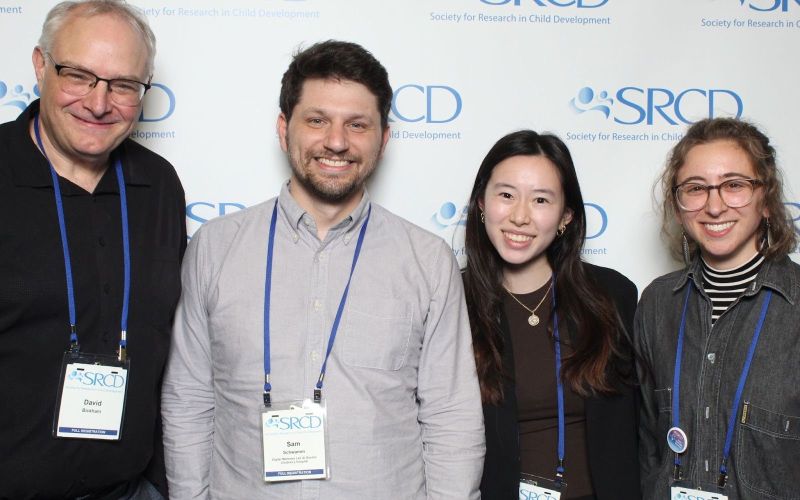
Society for Research in Child Development (SRCD) Biennial Meeting
Hannah Chidekel presented a poster on the reporting of harmful social media content while Dr. Bickham led a symposium on the impact of AI-powered tools on children’s engagement and trust. Dr. Yue’s research on AI voice assistants and social-emotional learning was a featured session. We are grateful for these opportunities to share our research, and explore the complex advantages and challenges presented by AI as it becomes an increasingly fundamental part of young people’s lives.
MAY 2025 | BOSTON, MA
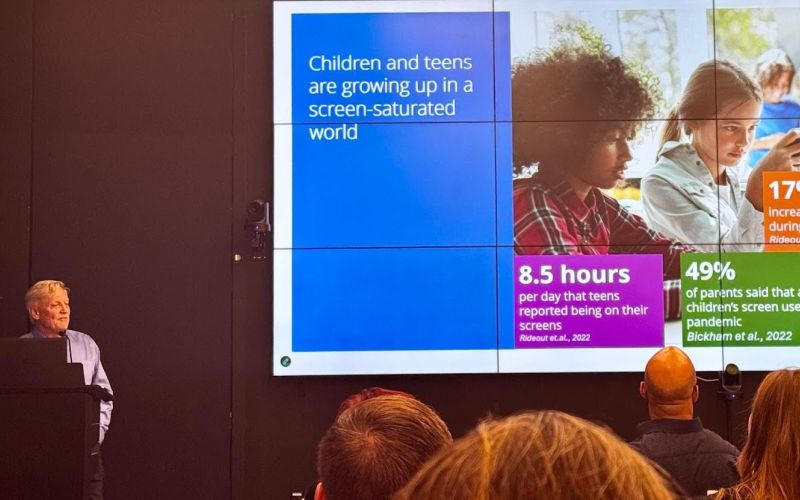
Adolescent Medicine Division’s Annual Lecture Series
The Boston Children’s Hospital Adolescent/Young Adult Medicine Division hosts an annual lecture series dedicated to deepening healthcare professionals’ understanding of the medical, emotional, and social challenges facing patients ages 10–25. Dr. Rich and Kathy Cooney addressed the increasingly urgent issue of problematic media use, providing future clinicians with practical identification strategies, communication techniques, and other clinical tools necessary to champion digital wellbeing in their work with adolescents.
MAY 2025 | WALTHAM, MA
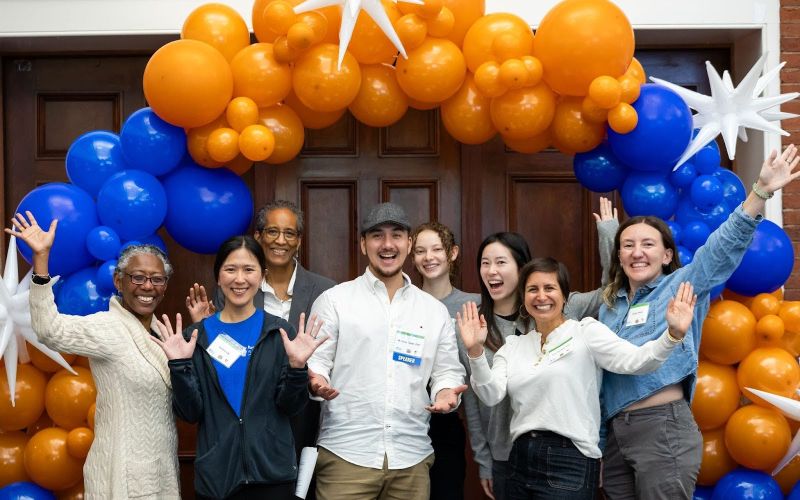
Youth Leaders Summit
Dr. Michael Carter, Katrina Ho, and Zoë Kronberg participated in the Youth Leaders Summit at Bentley University, leading dynamic sessions exploring the intersection of social media and mental health. This collaborative event hosted by Boston Children’s Office of Community Health and Atrius Health Equity Foundation brought together young leaders from across Massachusetts to engage in meaningful discussions about digital wellness in their communities.The youth-centered format encouraged peer learning and highlighted the importance of including young people’s perspectives in conversations about digital media.
MAY 2025 | JACKSON HOLE, WY
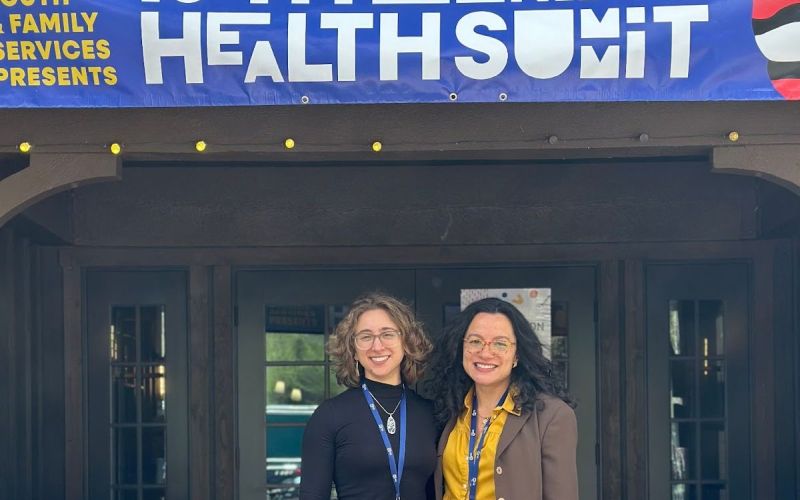
Teton Youth & Family Services Mental Health Summit
Nicole Powell and Hannah Chidekel led two interactive, youth-focused workshops exploring the vital intersections of digital media and mental health, empowering young people to validate their online experiences and understand how digital environments help to shape their identities. By fostering greater awareness and providing concrete tools for intentional engagement, the workshops helped participants explore technology’s impact on emotional wellbeing and identify actionable ways to support both their own mental health and that of their peers.
MAY 2025 | BOSTON, MA
Boston Children’s Hospital League Spring Meeting
Cori Stott presented on the influence of social media on children’s mental and social wellbeing. From the viewpoint of being a parent herself, Cori shared evidence-based strategies for understanding how digital media shapes children’s social and emotional development. Attendees learned practical approaches for starting meaningful tech conversations with children of all ages and left with tools to create healthier digital environments at home.
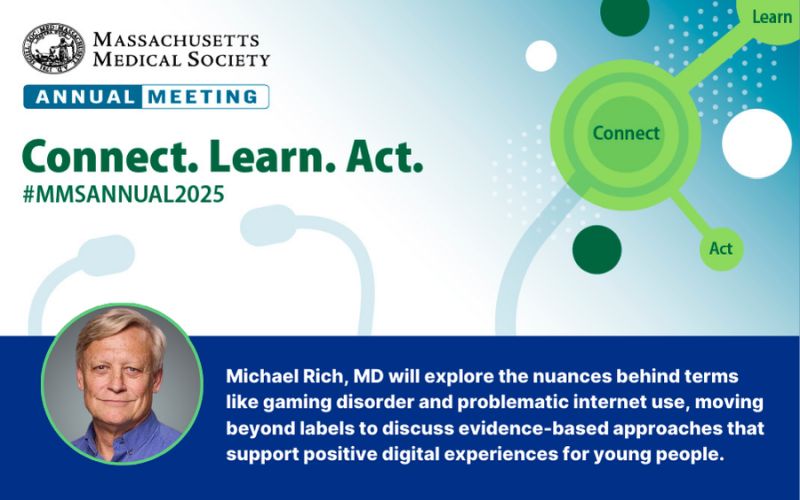
MAY 2025 | WALTHAM, MA
Massachusetts Medical Society Annual Meeting
Current studies suggest that 1.5-2.1 million adolescents in the United States experience challenges with interactive media use that may impact their wellbeing and academic engagement. Dr. Rich’s presentation focused on how we can better understand and support healthy digital media use among adolescents. It reflects our commitment at the Digital Wellness Lab to understand the full spectrum of digital media experiences—acknowledging and addressing both the benefits and challenges of technology in young lives.
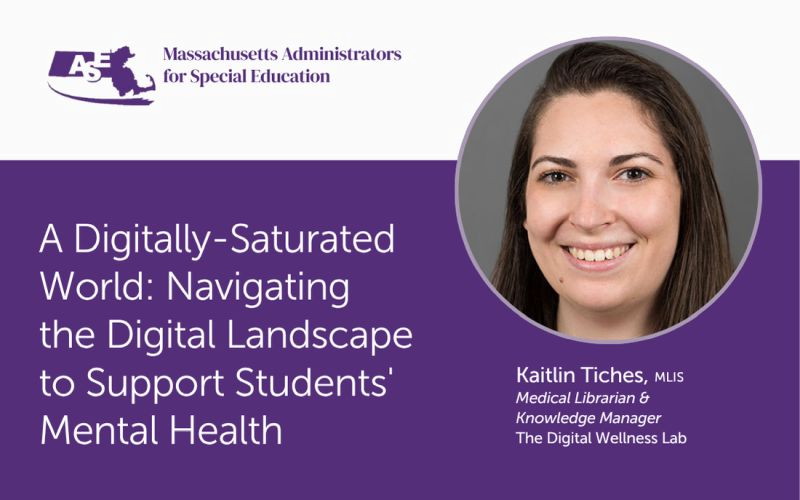
JUN 2025 | DEDHAM, MA
Navigating the Digital Landscape to Support Students’ Mental Health
Kaitlin Tiches was a keynote speaker at a meeting for The Massachusetts Administrators for Special Education. During her presentation, Kaitlin discussed ways educators can support mental and physical health when considering a student’s digital habits, and how to develop proactive strategies and techniques to respond to students who are experiencing adverse effects from their use of technology and interactive media.
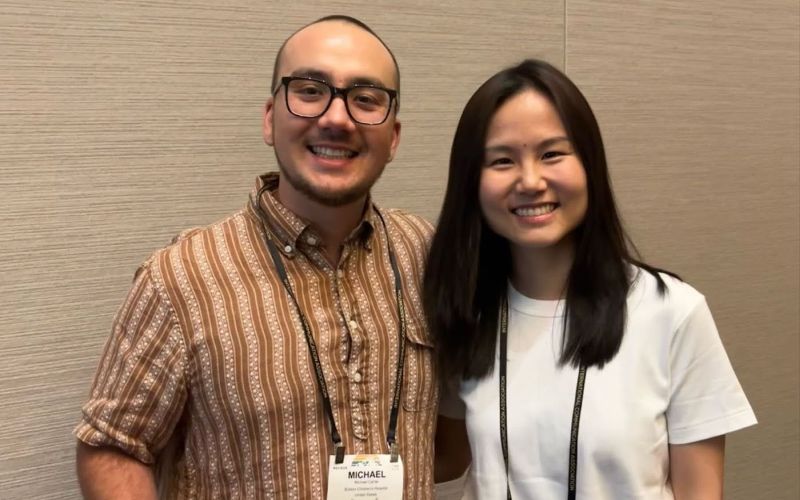
JUN 2025 | DENVER, CO
75th Annual International Communications (ICA) Conference
Dr. Carter and Dr. Yue joined a global gathering of scholars, engaging with cutting-edge research across diverse communication topics—from AI’s influence to mobile phones and social media. It was a week of rich insights and groundbreaking discussions. Dr. Yue gave a presentation, “Rules at Home, Rules Online: Parental Mediation and Adolescents’ Orientation toward Social Media Community Guidelines“. This important paper was accepted for publication in the Journal of Children and Media.
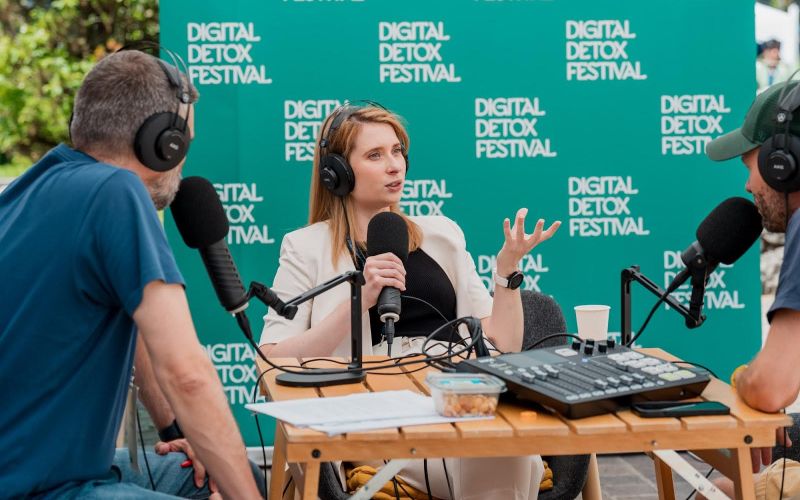
JUN 2025 | SAURIS, ITALY
Digital Detox Festival
Dr. Laura Marciano joined with Dr. Sando Formica for this inaugural event focused on disconnecting from technology to reconnect with oneself. Their panel addressed the question of how we can preserve our own happiness and purpose in a world that constantly pulls us outward. They emphasized that in today’s attention-driven landscape, happiness is a cultivated skill, rooted in self-awareness. The true antidote to digital overwhelm, they concluded, isn’t mere disconnection, but purposeful reconnection.
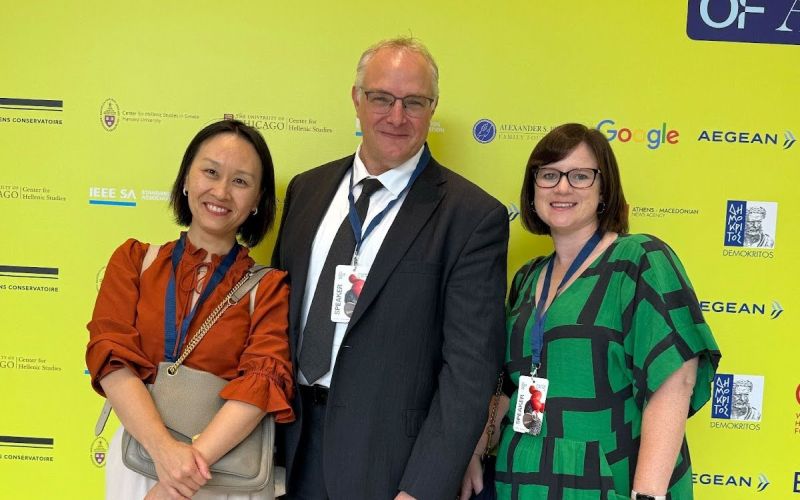
JUN 2025 | ATHENS, GREECE
The Lyceum Project
At the famed Athens Conservatoire, Dr. Bickham spoke on multiple panels about the Lab’s research as part of this year’s focus on a critical question: How do we enable children—tomorrow’s citizens—to flourish in the age of AI? These high-priority conversations brought together global experts to explore the intersections of artificial intelligence and child development. We’re honored to contribute our insights on digital wellness and youth wellbeing to this important international dialogue.
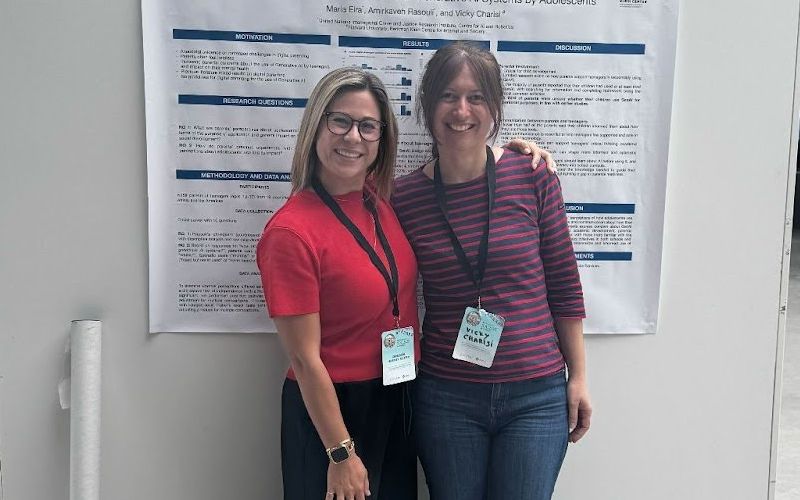
JUN 2025 | REYKJAVIK, ICELAND
Interaction Design and Children (IDC) Conference
Brinleigh Murphy-Reuter and Kaitlin Tiches presented within the Designing AI for Children’s Wellbeing segment of the conference, titled “From Academia to Application: Bridging the Gap in AI Guidelines for Early Childhood (Ages 2-6)”. This hybrid workshop convened an interdisciplinary community of researchers, industry professionals, and experts in AI and child wellbeing to pave the way for future research and practice that seeks to design AI technologies with children’s wellbeing in mind.
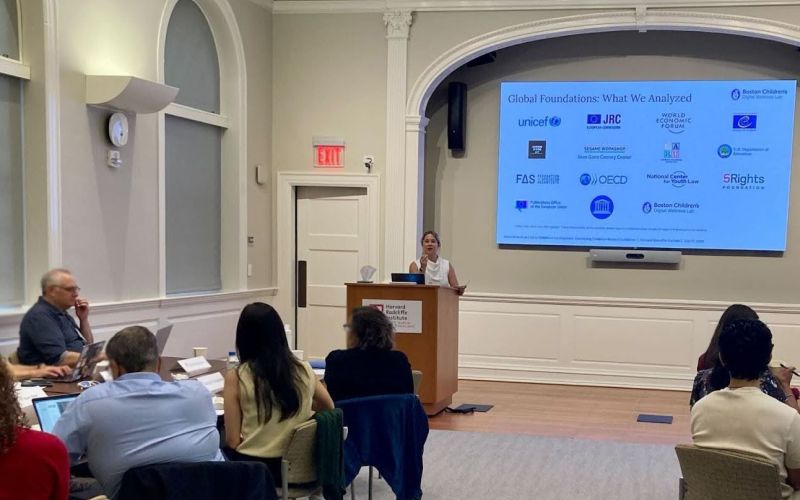
JUL 2025 | CAMBRIDGE, MA
Generative AI & Early Childhood Workshop
The Digital Wellness Lab convened 15+ academic experts, industry professionals, and youth representatives at the Harvard-Radcliffe Institute to develop the first comprehensive, expert-validated guidelines specifically for creating generative AI products for children ages 2-6. This collaborative effort aims to translate existing research into practical, actionable recommendations that technology developers can use when considering designing or developing AI tools for young users.

JUL 2025 | ASPEN, COLORADO
Aspen Ideas Festival
Dr. Rich and Cori Stott brought the Lab’s research and clinical insights to the Aspen Ideas Festival to share what we’re learning and to hear from some of the brightest minds and deepest thinkers in key issues facing our world. Dr. Rich took part in a panel discussion addressing young people’s mental health in a constantly evolving technological world.
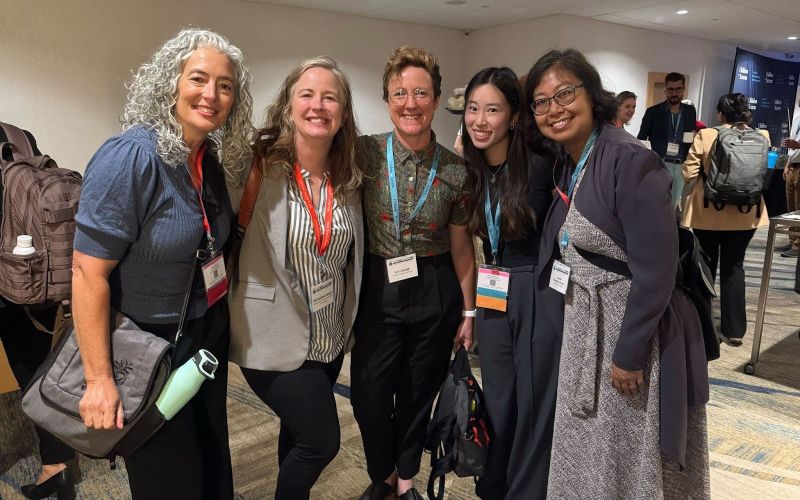
JUL 2025 | WASHINGTON, D.C.
Children and Screens: Digital Media and Developing Minds International Scientific Congress
Katrina Ho joined researchers, clinicians, educators, government agency representatives, and others from around the world to explore how digital media use impacts the social, psychological, cognitive, behavioral, and physical development of children and adolescents. Katrina presented a poster “From Tools to Companions: Teens’ Usage and Perceptions of AI Products” based on findings from the Lab’s Pulse Survey on how teens view and use AI.
JULY 2025 | VIRTUAL
Researcher Roundtable hosted by Pinterest
An inaugural Inspired Internet Pledge gathering hosted by Pinterest, this virtual convening brought together Pledge signatories and advisors for meaningful dialogue about best practices in end user wellbeing. This aligns with the third principle of the Pledge: “Commit to Openness,” which focuses on sharing lessons collaboratively. We believe the best innovations happen when we learn from each other, and this event embodies that spirit of collective progress toward a healthier digital ecosystem.
JULY 2025 | LONDON, UK
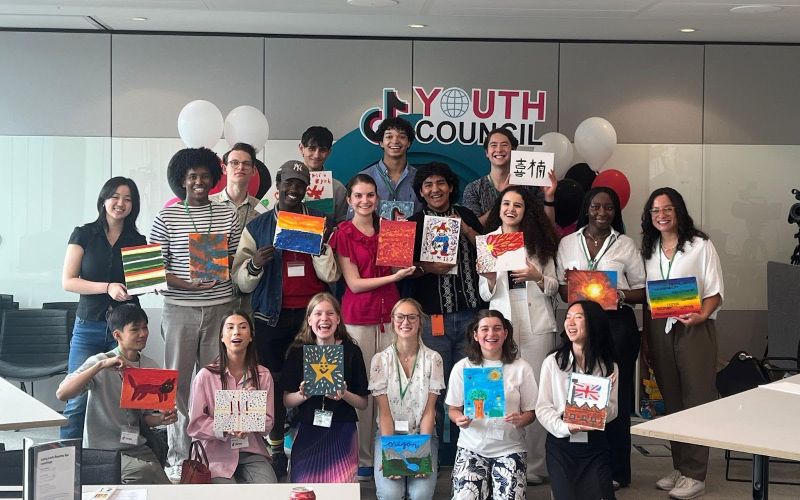
Tik Tok Global Youth Council
Nicole Powell led a powerful session with the teens in TikTok’s Global Youth Council, focused on building digital balance. The young people, who joined in-person from around the globe, engaged in a hands-on session designed to identify how they use technology as a tool and as an enabler of their own creativity and connection- building, and how they choose when to log off and engage in physical-world activities and connections. We learned so much from their thoughtful engagement and authentic experiences!
AUGUST 2025 | KERALA, INDIA
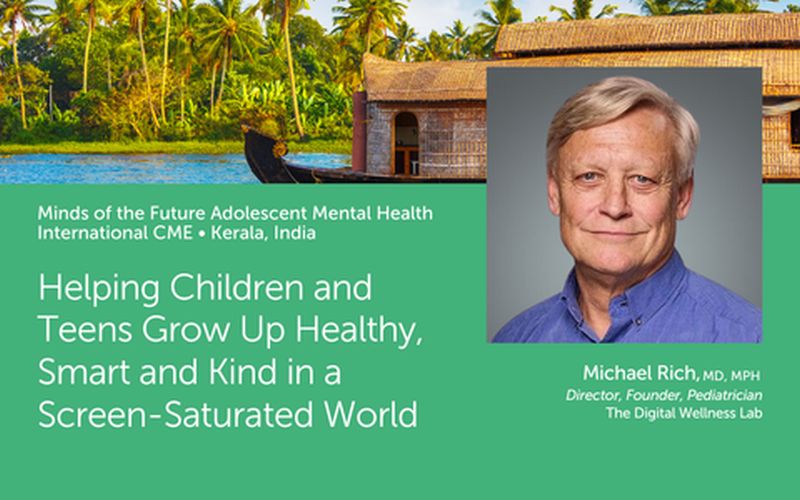
Minds of the Future: International CME on Adolescent Mental Health
The conference’s guiding theme was “Fostering Safety: Preventing Self-Harm and Violence in Adolescents.” Dr. Rich’s virtual scientific session addressed some of the most critical issues facing young people today with technology and digital wellbeing. Thank you to the organizers at Adolescent Health Academy (AHA) Kerala, the Indian Academy of Pediatrics (IAP) Kerala, and the Indian Academy Of Pediatrics (IAP) Cochin for inviting the Lab to this meaningful academic gathering, and being part of these important global conversations.
AUG 2025 | WASHINGTON, D.C.
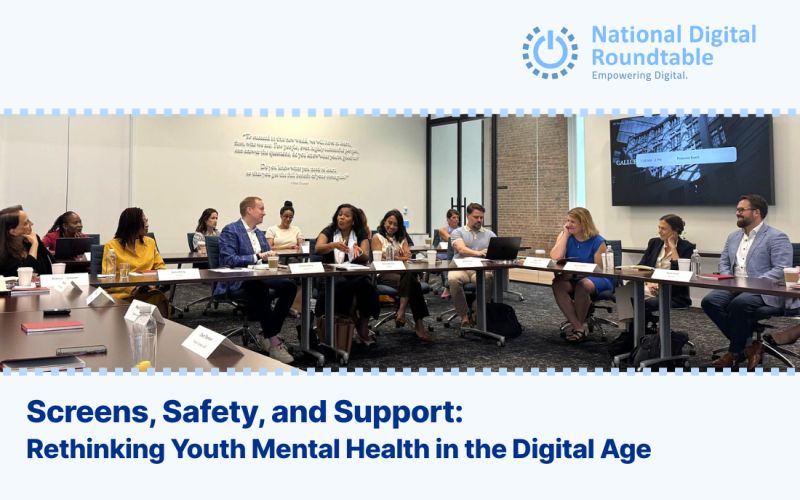
National Digital Roundtable
At a “Screens, Safety, and Support” event, Cori Stott joined national leaders in exploring how to rethink mental health and create healthier digital spaces for young people. One clear takeaway: digital wellbeing for youth can’t be an afterthought—it must be built into the design of platforms, policies, and support systems from the start. That means centering young people’s needs, voices, and lived experiences, while ensuring that safety and mental health considerations are embedded directly into the technologies they use every day.
AUG 2025 | BOSTON, MA
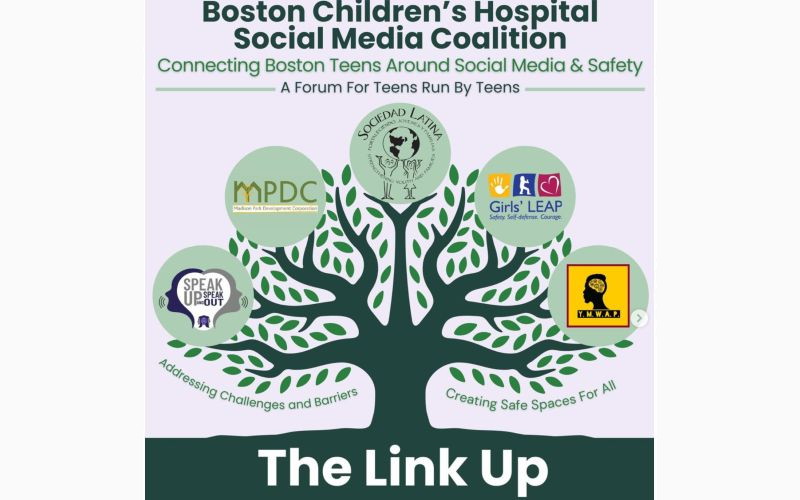
Boston Children’s Social Media Coalition (A Forum for Teens Run By Teens)
Hannah Chidekel participated in an important conversation with teens at a gathering hosted by Boston Children’s Office of Community Health and Sociedad Latina. The forum focused on the pros and cons of social media, school cell phone policies, and the connection to behavioral health. We’re always thrilled when youth voices are directly included in the conversation, and grateful we could contribute to this vital discussion on how to improve quality of life for young people navigating the digital age.
SEPT 2025 | CAMBRIDGE, MA
Connected Learning Summit at MIT
Brinleigh Murphy-Reuter and Zoe Kronberg presented the Lab’s foundational AI and early childhood research in a presentation titled: From Academia to Application: Bridging the Gap in AI Guidelines for Early Childhood (Ages 2-6). This project tackles a pressing problem: while 88% of children aged 3–12 have smart speakers and 40% use Generative AI, there are no developmentally appropriate design guidelines for children ages 2–6. To address these critical gaps, the Lab is moving into the next phase in developing actionable, developmentally-grounded design guidelines that commercial product teams can use immediately.
SEPT 2025 | PORTO ALEGRE, BRAZIL
Brazilian Congress of Adolescence
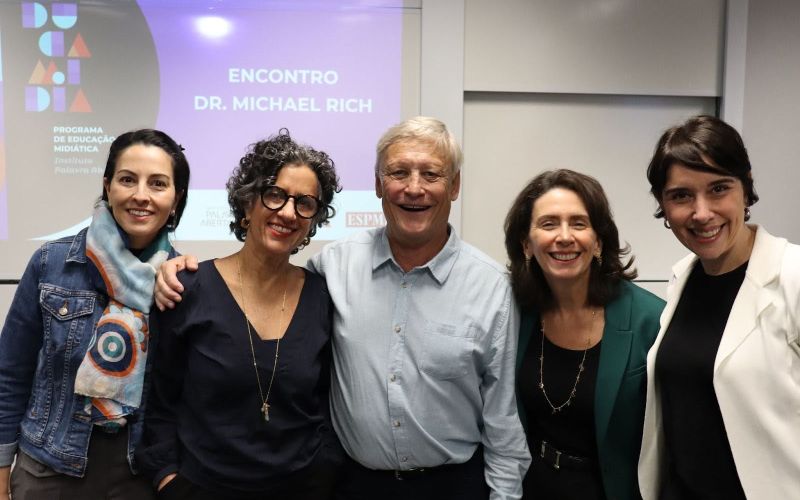
Dr. Rich was a featured speaker at the 17º Congresso Brasileiro de Adolescência (17th Brazilian Congress of Adolescence), where he presented key topics from his book The Mediatrician’s Guide, which has been newly translated into Brazilian Portuguese. He spoke candidly about the crucial topic of adolescent development and fostering a healthy coexistence with technology. His insights underscored the importance of shifting the focus from simply limiting screen time to guiding children and families toward purposeful, healthy digital engagement.
SEPT 2025 | NEW YORK, NY
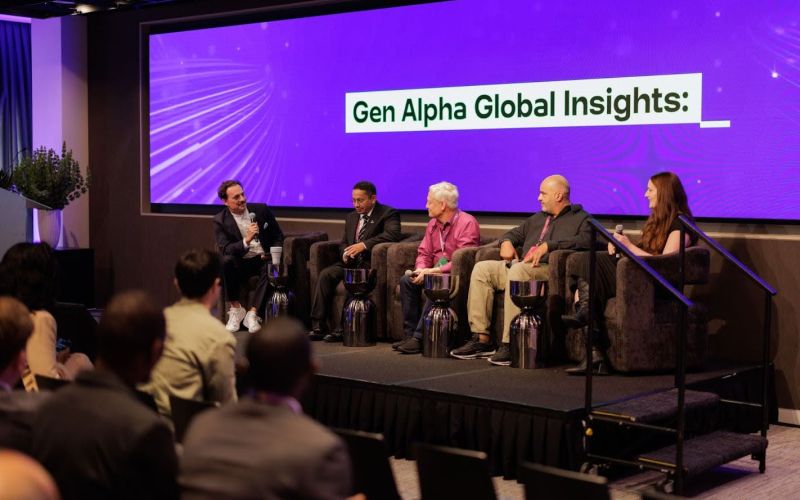
Sync Global Digital Wellbeing Summit at UNGA
Dr. Rich had the honor of participating in the Sync Global Digital Wellbeing Summit, a landmark event co-hosted by the WHO Foundation during the UN General Assembly. Together with youth, policymakers, tech innovators, and health leaders, the discussions were forward-looking, diving into how transformative forces like AI, gaming, and the flow of information are reshaping the landscape of modern health. By centering the conversation on youth voices and humane innovation, the summit laid the groundwork for a digital future that prioritizes wellbeing and connection.
SEPT 2025 | VIRTUAL
Researcher Roundtable hosted by the Digital Wellness Lab
Hannah Chidekel hosted the second Inspired Internet Pledge roundtable to unveil research insights from the Lab’s Pulse Survey on Youth Sense of Belonging in Online Spaces. We were thrilled to host this special research preview for Pledge members and their teams. By sharing our research findings so openly, we aren’t just following our third Pledge principle—we are fueling a wave of progress that lifts up every single member of our Pledge community.
OCT 2025 | SAN DIEGO, CA
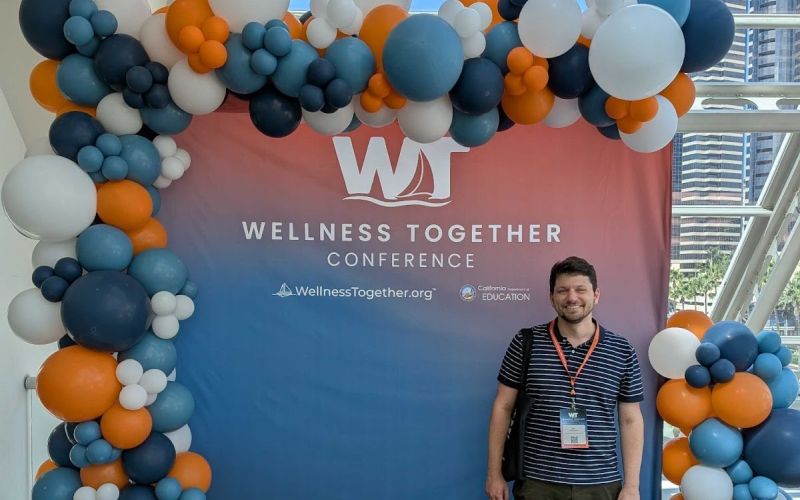
Beyond the Ban: What Students Want From School Phone Policies
Sam Schwamm led a presentation at the Wellness Together Conference, a convening which provided a prime opportunity to disseminate actionable findings from the Lab’s most recent Pulse Survey on student cell phone policies—and engage directly with policymakers, school administrators, and educational leaders. We’re grateful to be part of this national discourse in understanding the broader context of the role of phones in students’ academic and social lives, and how the research can help inform the development of school phone policies that better reflect students’ experiences and needs.
OCT 2025 | VIRTUAL
Researcher Roundtable hosted by AURA
The third Inspired Internet Pledge Researcher Roundtable featured the TECHWISE study outcomes from AURA, a leading AI-powered online safety platform for families. The session was presented by Dr. Scott Kollins (Chief Medical Officer) and Karen Goetz (Manager, Clinical Research), and featured research from Aura’s recent paper, Overconnected Kids: Digital Stress, Addiction-Like Behaviors & AI’s Powerful Grip. This exclusive research preview for Pledge members and their teams was a powerful demonstration of collaborative innovation. By bringing together our members to openly share lessons, we live out our third Pledge principle and accelerate progress for everyone.
OCT 2025 | ATLANTA, GA
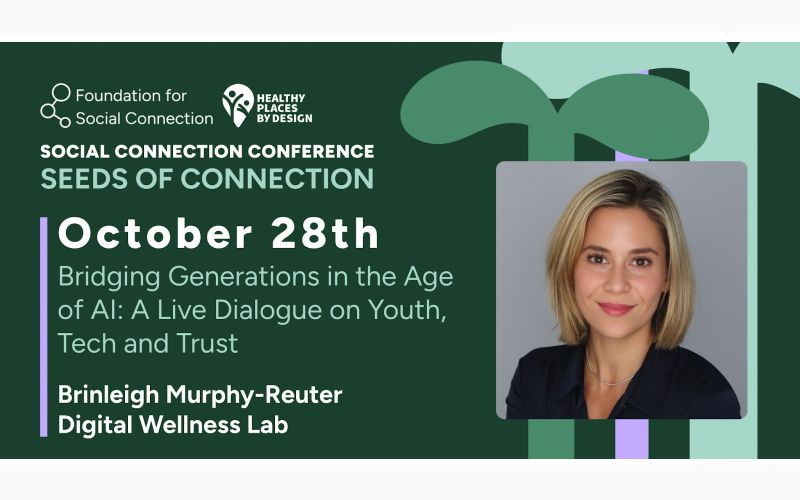
Social Connection Conference (Seeds of Connection)
Brinleigh Murphy-Reuer spoke at a conference hosted by The Foundation for Social Connection and Healthy Places by Design, designed to bring together cross-sector changemakers to co-create solutions, spark new relationships, and advance a more connected society. Brinleigh participated in a panel titled Bridging Generations in the Age of AI: A Live Dialogue on Youth, Tech and Trust and shared her perspective on how intentional relationship-building can transform communities and systems at every level.
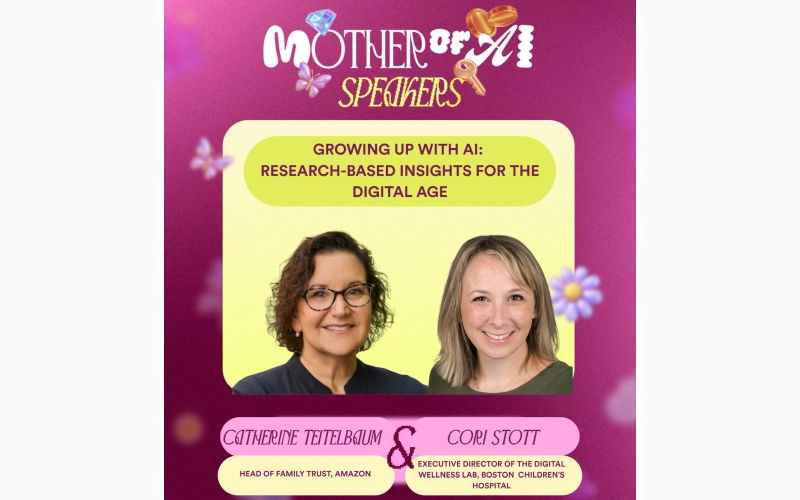
OCT 2025 | FORT LAUDERDALE, FL
Mother of AI Summit
Cori Stott joined Catherine Teitelbaum from Amazon Kids for a fireside chat titled “Growing Up with AI: Research-Based Insights for the Digital Age”. Cori and Catherine shared current research and what lessons from past tech shifts can tell us about how families can confidently navigate the opportunities and challenges of the AI era. The Mother of AI Summit is hosted by The Mom Economy as an opportunity to empower women—including millennial moms, Gen Z, caregivers, entrepreneurs, and professionals— to shape the AI revolution on their own terms through hands-on workshops and thought leadership.
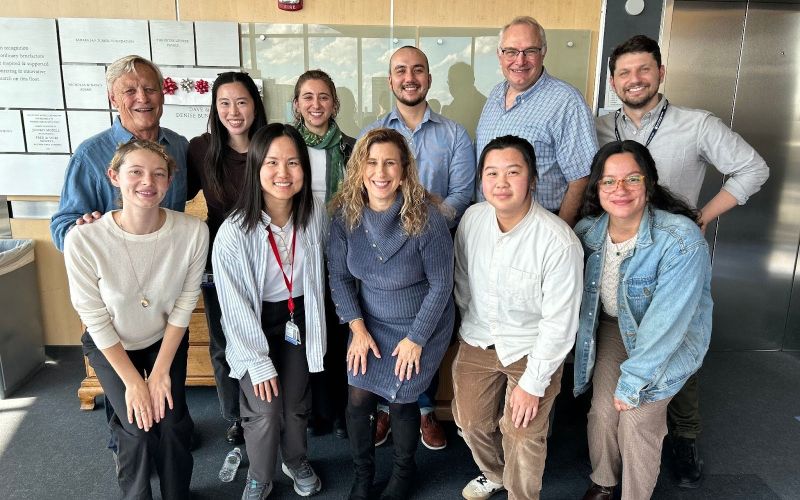
OCT 2025 | BOSTON, MA
Annual Masland Day Lecture
Every October, the Boston Children’s Division of Adolescent/Young Adult Medicine gathers to celebrate Dr. Robert Masland’s contributions to adolescent medicine and medical training. Dr. Bonnie Halpern-Felsher from Stanford University delivered a compelling address on adolescent substance use. Afterwards, Dr. Rich was invited to share some honorary words about Dr. Masland before breaking for lunch. Ten members of the Lab’s research team attended to hear more about the cutting-edge work in the field—an invaluable opportunity to connect with colleagues and leaders driving the future of adolescent medicine.

OCT 2025 | TORONTO, CANADA
Bridges to Belonging Global Symposium
Dr. Bickham, Dr. Rich, and Hannah Chidekel traveled north to share findings from our most recent Pulse Survey focusing on how young people build and maintain a sense of belonging both online and in the physical world. The gathering, hosted by the Belonging Forum, brought together thought leaders, researchers, and policymakers to amplify the movement for belonging across the lifespan. A highlight for our team was hearing from Margaret Atwood as she shared her own insights on belonging and mattering.

NOV 2025 | PHILADELPHIA, PA
Friends Select School Workshops
What does it mean to take a community approach to developing digital wellness? As part of its annual Wellness Program, the Friends Select School invited the Digital Wellness Lab to discuss digital balance and safety with students, faculty, and community members. Nicole Powell, Hannah Chidekel, and Katrina Ho worked with students from grades 4-12 through interactive workshops, while Dr. Rich led a discussion with parents oriented around his book, The Mediatrician’s Guide: A Joyful Approach to Raising Healthy, Smart, Kind Kinds in a Screen-Saturated World. It was a packed day that fostered a shared language across all members of the school community. Thank you to Friends Select for their warm welcome and so many rich, reflective conversations.
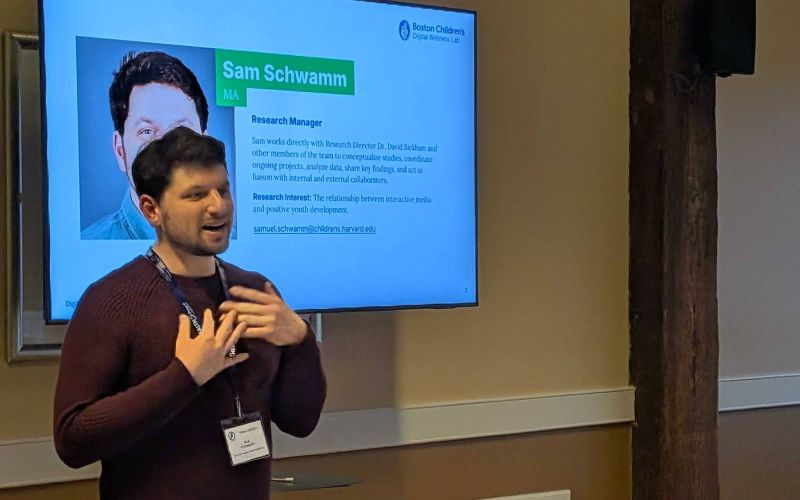
NOV 2025 | ROCKPORT, ME
MAHPERD Annual Convention
It can’t be overstated: digital wellbeing is a core element of overall mental and physical health. Sam Schwamm connected with 1,500+ state leaders, educators and health professionals with the Lab’s latest research on cell phones, social media, and video games. His session helped empower attendees to: understand the influence of digital media and technology on students’ health and wellbeing; address misconceptions about youth mental health and digital media; implement strategies for building students’ digital literacy and self-regulation skills (critical thinking, healthy habits, and autonomy). We greatly value these opportunities because they allow us to collaborate directly with the leaders who shape students’ daily lives, translating our research into real-world impact.
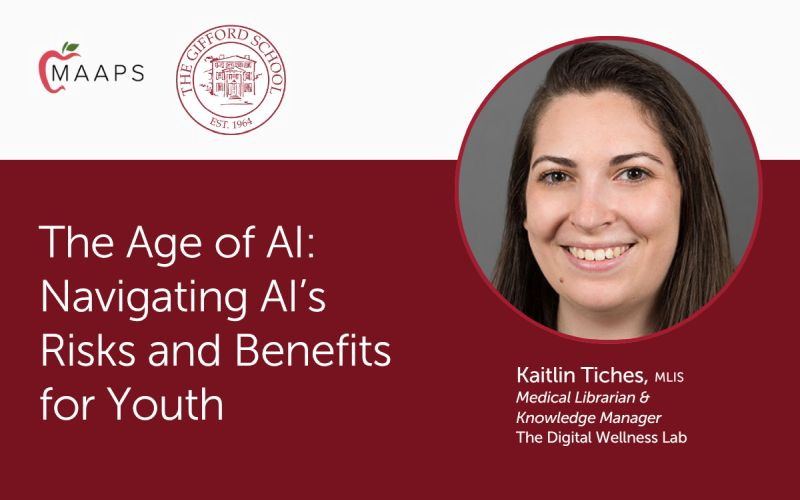
NOV 2025 | WESTON, MA
The Age of AI: Navigating AI’s Risks and Benefits for Youth
Kaitlin Tiches led a conversation with parents and educators from the Massachusetts Association of Approved Special Education Schools (MAAPS) organization at the Gifford School. Through this talk, participants explored young people’s use of artificial intelligence applications including smart speakers and generative AI tools like chatbots. Attendees learned strategies for parents and caregivers to make decisions about if, how, and/or when these tools should be used in ways that promote digital wellbeing for their child(ren). Attendees were also introduced to critical thinking questions for assessing risks and benefits of existing and new technologies that young people may be likely to adopt.
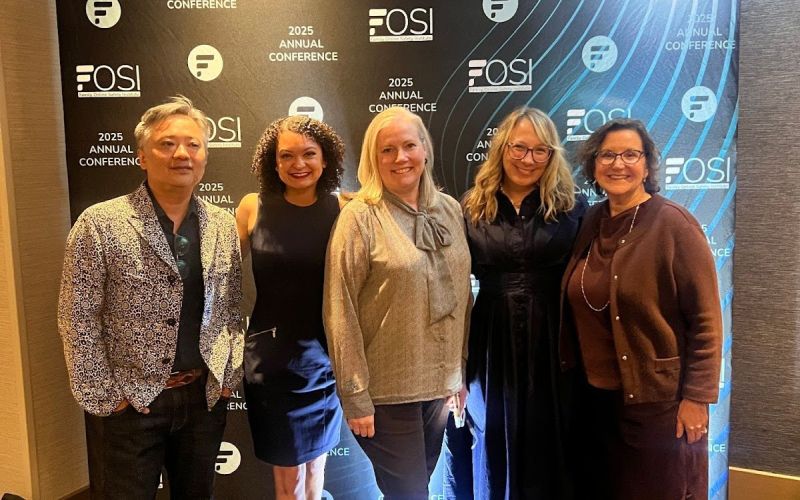
NOV 2025 | WASHINGTON, D.C.
Family Online Safety Institute Annual Conference
Dr. Bickham, Kaitlin Tiches, and Cori Stott attended FOSI’s annual conference, “Online Safety in Tumultuous Times”. The focus was safeguarding children and families by balancing risk management with opportunities for positive digital experiences. Cori participated on a panel exploring “Partnership Frameworks for Family Safety: Collaborative Approaches to Digital Wellbeing”. Moving past the “all screen time is bad” narrative, Kaitlin moderated the “Quality Content for Kids: Making Screen Time Worth It” expert panel. We’re grateful to be part of these essential platforms at FOSI, which empower cross-sector leaders to forge intentional partnerships and gain the actionable insights needed to advance a truly collaborative culture of online safety.
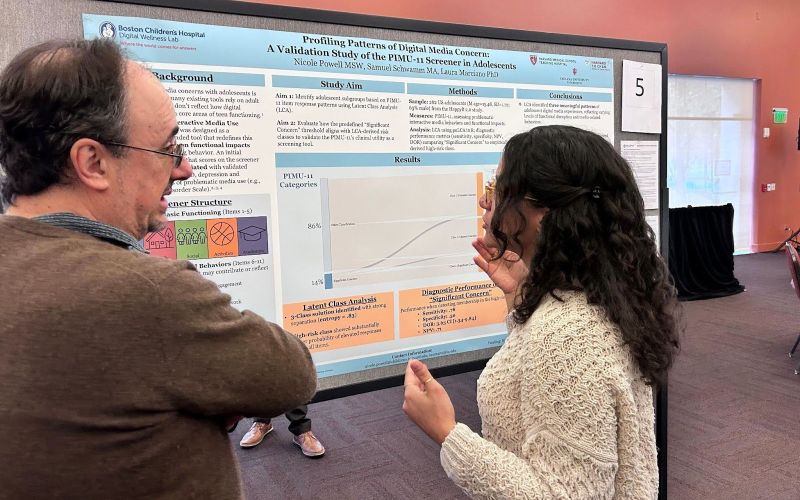
DEC 2025 | PA
PRISM Symposium
PRISM is a hub for connecting researchers, practitioners, and advocates, tackling everything from ethical AI to digital health interventions. Nicole Powell’s poster session unveiled the Lab’s new PIMU-11 screener—a tool that fundamentally transforms how clinicians can assess teens’ digital media concerns. The new screener moves away from addiction models and shifts the focus entirely to functional impacts across 5 vital areas: sleep, family, social life, activities, and academics.This important work exemplifies the Lab’s dedication to creating the blueprints needed for clinical practice in the digital age.
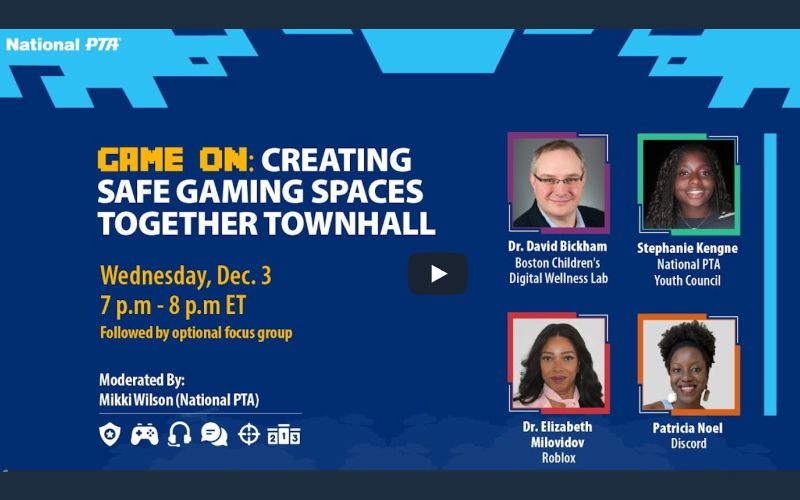
DEC 2025 | VIRTUAL
National PTA Townhall: Creating Safe Gaming Spaces Together
Dr. Bickham joined colleagues Dr. Elizabeth Milovidov from Roblox, Patricia Noel from Discord, and Stephanie Kengne for a robust panel discussion on what young people are experiencing and looking for in gaming platforms. Further, they explored the issues of family engagement in gaming and family members’ role in this space and identified steps families and youth can take and tools they can use to ensure gaming spaces are safe and positive experiences for youth. Watch the video here.
Our Team & Supporters
The People Behind Our Work
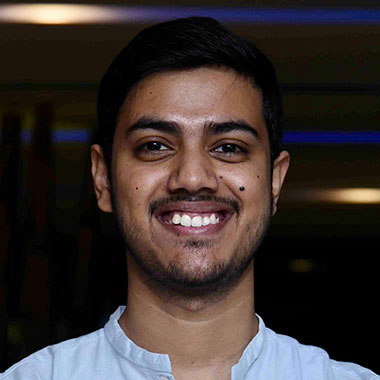
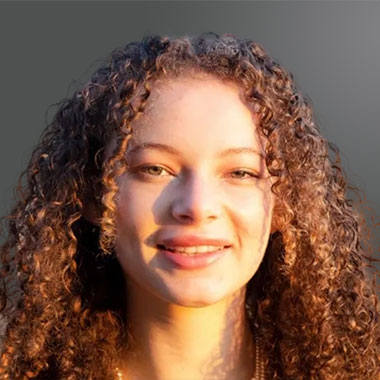
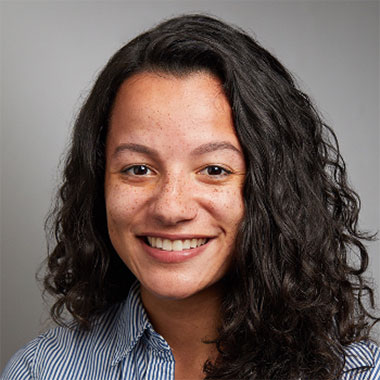
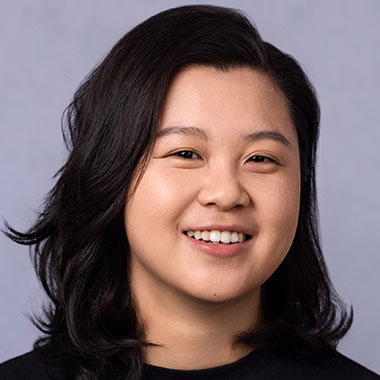
Our work depends on building authentic connections with young people, and that starts with a team that reflects and understands their experiences. In 2025, we both promoted and welcomed several early-career team members, many of whom now lead our Amplify Youth workshops while contributing across our research portfolio.
We also celebrated a standout achievement when Lab Scientist Dr. Zhiying (Zoey) Yue received the Charles E. Irwin, Jr. New Investigator Award from the Society for Adolescent Health and Medicine. Her research, Gaming Alone Together: The Role of Loneliness and Social Anxiety in Adolescent Video Gaming Behaviors, explores the complex connections between teen mental health and gaming, advancing critical conversations in the field.
We are proud of our growing team and the energy, insight, and dedication they bring to this work every day.
New Hires & Promotions






Building Bridges Across Sectors
Creating a healthier digital environment for young people requires collaboration. The Lab contributes to advisory boards and initiatives around the world, bringing research and clinical insights to industry leaders, policymakers, and child safety advocates. Together, we’re shaping the approaches, policies, products, and protections that define young people’s digital lives.
Led by the EDSAFE AI Alliance, the Safe AI Companions Task Force is a cross-sector team of educators, policymakers, researchers, industry experts, youth, and civil rights advocates convened to evaluate how AI companion and relational tools can be developed to support students’ wellbeing, safety, and privacy in the context of the education sector. The Task Force focuses on the intersection of schools, educators, and the development of AI literacy programming as AI companions or relational tools become more ubiquitous in students’ lives.
The Fitbit Youth Advisory panel provides insight and suggestions on design of activity tracking and smart watch technology designed for you

The Google Kids Expert Advisory Group informs Google policies and practices related to products and features for kids, teens, and families and comments on relevant existing research as well as suggests needed new research regarding the needs and interests of young people.

The iRAISE Alliance (International Research-Driven Alliance for AI Serving Every Child), originated by the Paris Peace Forum. The alliance focuses on ethical, child-centered AI design and collaboration for safe, fair, and inclusive AI for children.
Meta’s Youth Advisory Group, composed of a diverse, global group of experts in youth mental health and digital wellness, provides feedback on the development of new products and policies for young people, with a focus on health, safety and privacy.
The Online Child Exploitation Prevention Initiative (OCEPI) by the Internet Crimes Against Children Task Force Program, consists of individuals and agencies specializing in efforts to prevent children from becoming victims of online sexual exploitation and abuse. Initiative members convene with an ongoing goal of working collaboratively to achieve a consistent and effective global prevention message.
Open AI’s Expert Council on Well-Being and AI brings together leading researchers and experts with decades of experience studying how technology affects our emotions, motivation, and mental health. Their role is to advise, pose questions, and help define what healthy interactions with AI should look like for all ages.
Learn More →
Protection through Online Participation (PoP), created by the UN Special Representative of the Secretary-General on Violence Against Children and International Telecommunication Union, is an intersectoral and collaborative initiative aimed at better understanding how children and young people use digital platforms to be safer. This initiative has started to map child protection services online, with examples drawn from 118 countries.

As part of their commitment to digital civility, Roblox’s Trust and Safety Advisory Board is composed of world-renowned digital safety authorities who convene to discuss Roblox’ progress on their Digital Civility Initiative.
Snap’s Safety Advisory Board convenes regularly to share evidence-based feedback on safety-related policies, product features, and other related initiatives to support a healthier online experience for teens and young adults.

The Mental Health Coalition is embarking on a multi-year journey to transform youth mental health in the digital space via the Safe Online Standards for Kids’ Mental Health (S.O.S.) initiative by developing credible, data-driven standards for kids’ mental health on technology platforms.
Stanford University’s Center for Adolescent Health has invited Subject Matter Experts for Digital Media and Youth as part of the Adolescent Health and Well-being Project (AHWP)—which aims to research, strengthen, and effectively disseminate policy guidance that enhances adolescent health services, ultimately improving the health and well-being of young people across the United States.
Learn More →
Joining the Conversation
In 2025, our team participated in events alongside experts and thought leaders across the digital wellness landscape. From summits on AI and youth mental health to discussions on belonging and online safety, these gatherings offered opportunities to share our research, learn from others in the field, and strengthen the collaborations that drive our work forward.
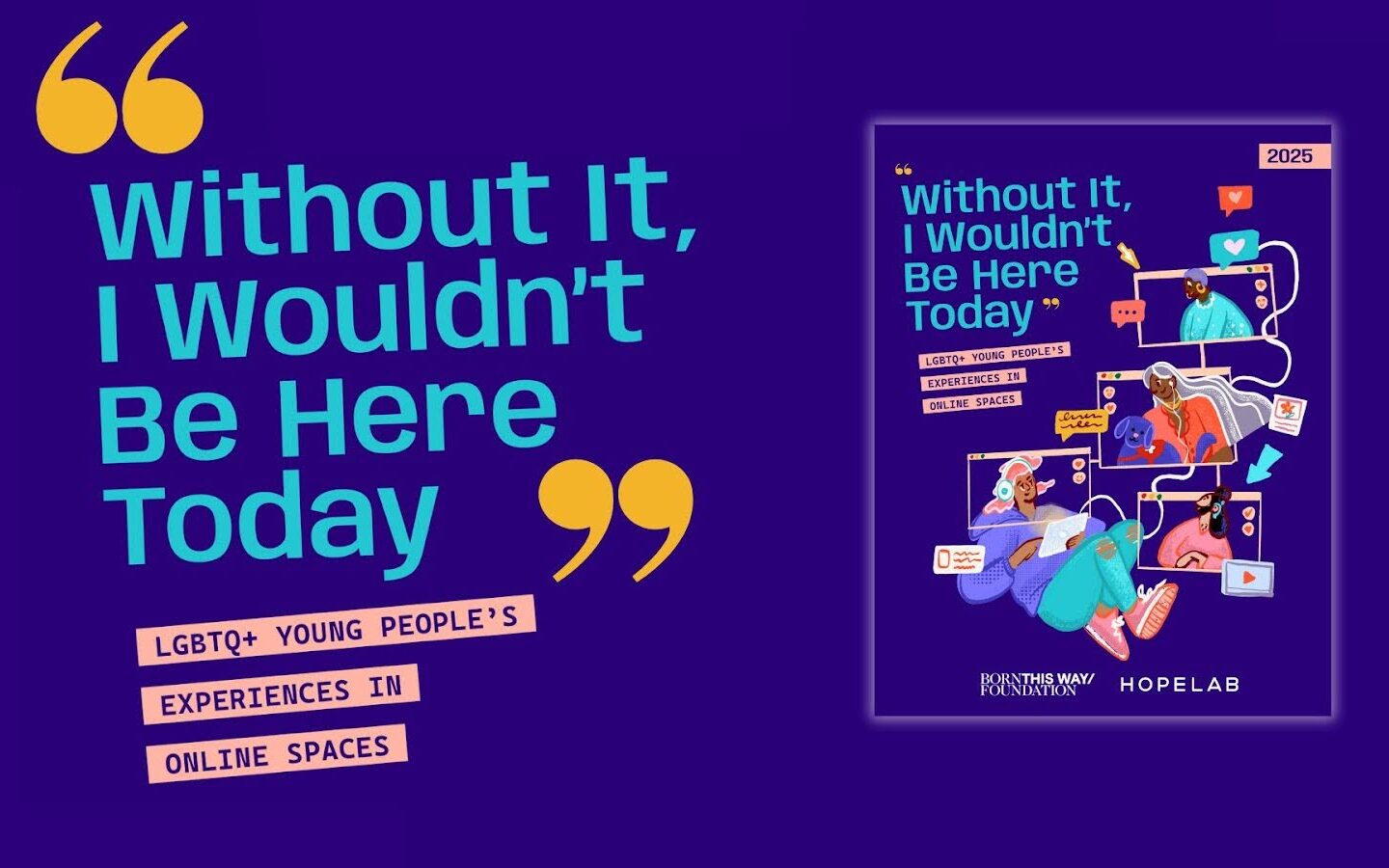
MAR 2025 | NEW YORK, NY
Born This Way Foundation LGBTQ+ Youth Convening
Kaitlin Tiches attended “Without it, I Wouldn’t Be Here Today,” a convening on LGBTQ+ youth connection and safety in online spaces, based on a new research report from Born This Way Foundation and Hopelab. For many LGBTQ+ young people, online communities are more than just platforms—they’re lifelines for support, identity exploration, and belonging. This event centered youth voices, shared new research findings, and sparked critical conversations on how we can ensure these spaces remain safe, inclusive, and empowering.
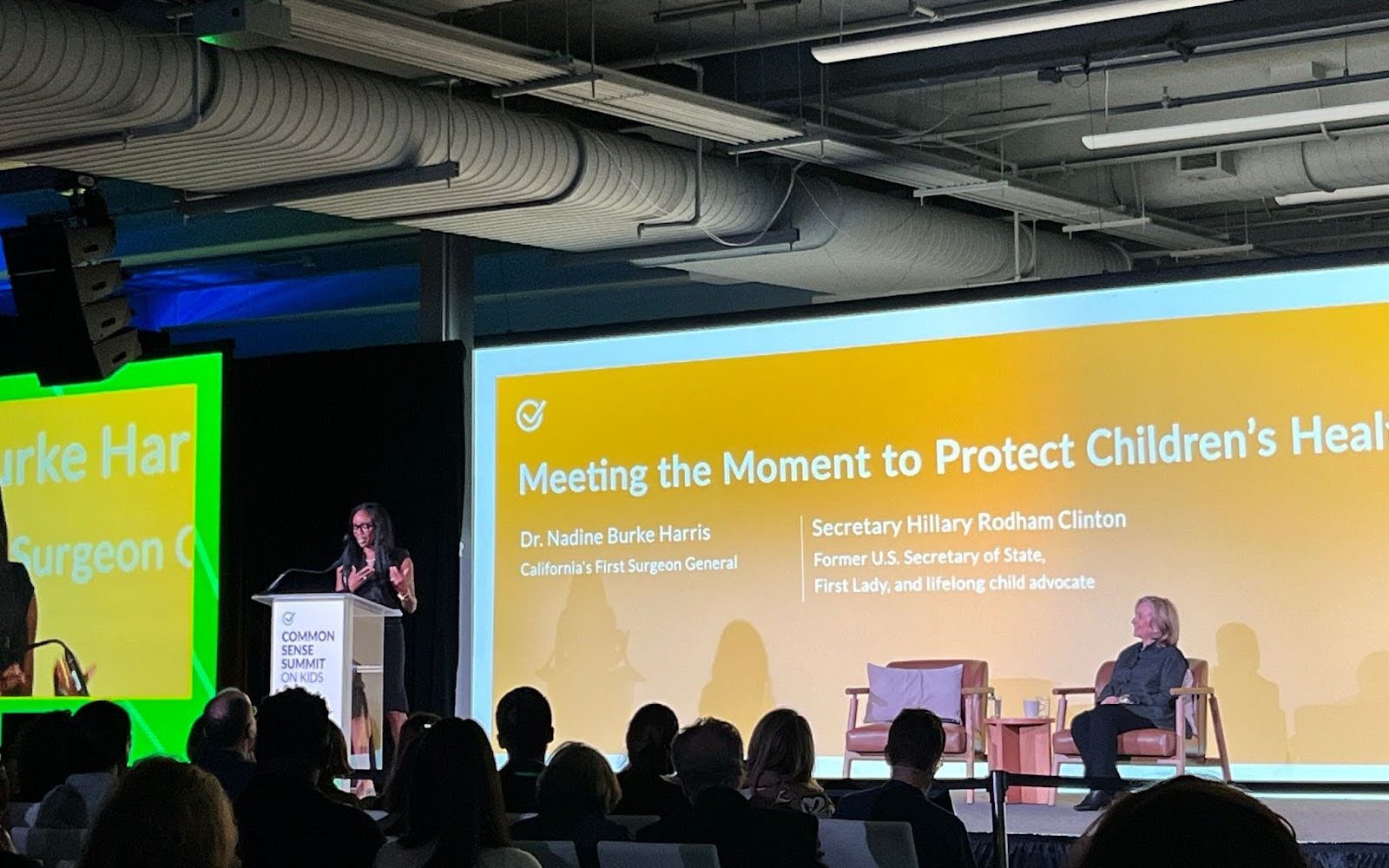
MAR 2025 | SAN FRANCISCO, CA
Common Sense Summit on Kids and Families
Cori Stott joined leading advocates, policymakers, researchers, and industry experts to discuss the urgent challenges facing kids and families, from youth mental health to the role of technology in child development. Key themes included: how online engagement increases pressure on young people at younger ages, the power of including youth voices in policy and tech design, supporting young people’s mental and physical wellbeing requires playing our part, the transformative impact of collaborative efforts, and young people’s limitless capacity to innovate.

MAY 2025 | BOSTON, MA
PAX East Gaming Convention
Dr. Bickham and Cori Stott attended the convention (with an expert games tester by their side!) to speak with developers, safety moderators, and gamers about their experiences of belonging and community-building within these important interactive spaces. They also shared about the Lab’s current and upcoming research to discover and amplify positive impacts of gaming on kids’, teens’, and young adults’ mental, social, and emotional wellbeing.
JUN 2025 | NEW YORK, NY
Games for Change Festival
This year’s theme at Parsons School of Design was “Designing for Tomorrow,” exploring how games and XR can break down barriers and transform entertainment into measurable impact for education, health, and wellbeing. Kaitlin Tiches joined diverse voices at the festival, including everyone from industry veterans to next-generation innovators, all united in a desire to harness the power of collaborative design and play to create positive change.
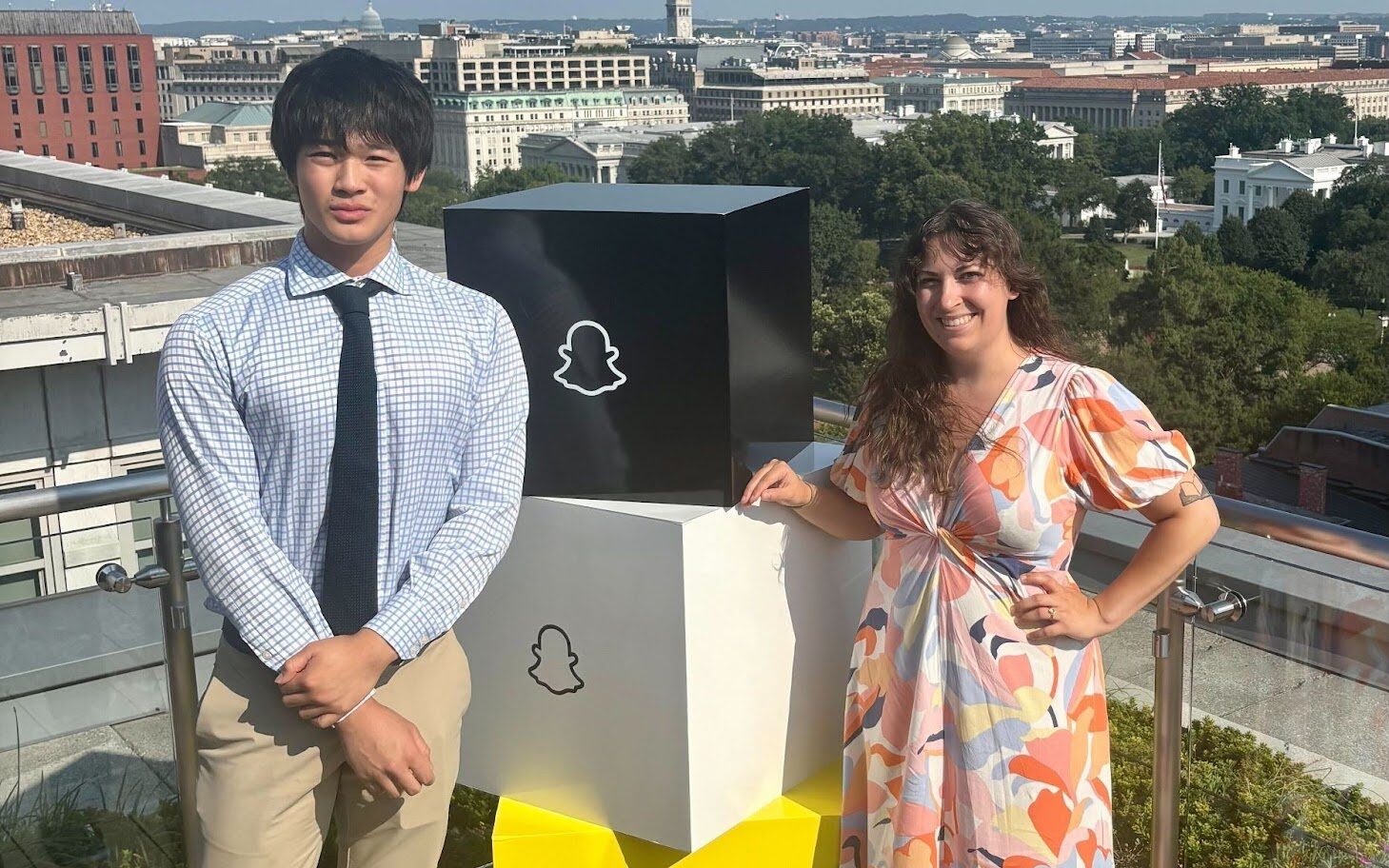
AUG 2025 | WASHINGTON, D.C.
U.S. Council for Digital Well-Being
Kaitlin Tiches attended Snap’s inaugural capstone event. It was inspiring to hear from the Snap council members— including the Lab’s own Student Advisory Council member, Jeremy! — about crucial topics like online safety, media literacy, and how adults can best support teens.
A key takeaway from the discussions was the importance of open and clear conversations with teens about online risks. The Council emphasized the need to destigmatize reporting, shifting the perspective from “snitching” to actively protecting yourself and your community.
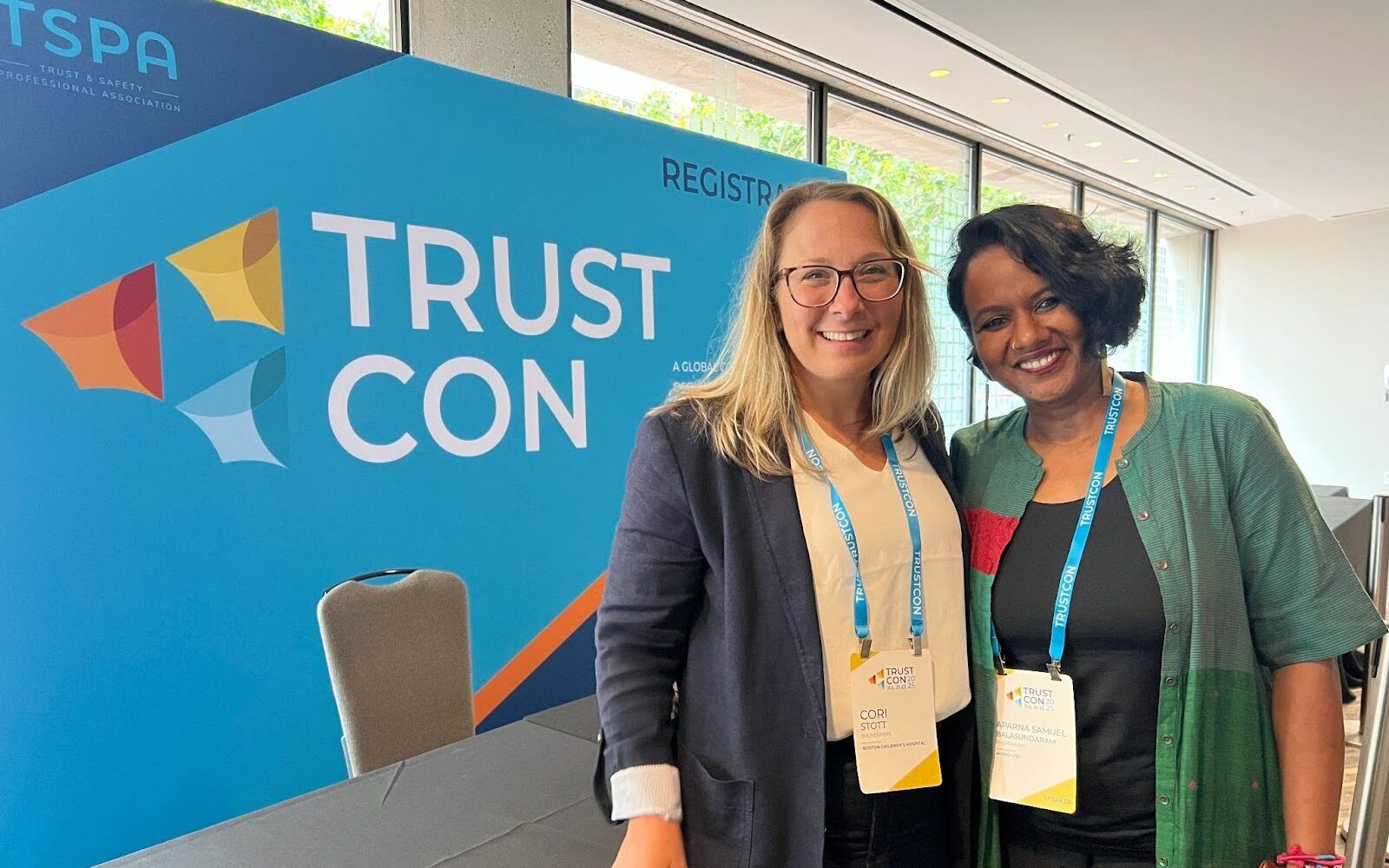
JUL 2025 | SAN FRANCISCO, CA
TrustCon Global Conference
Cori Stott joined Trust & Safety leaders at TrustCon to discuss the latest in safety innovations and research, engaging in critical conversations on platform design, youth agency, and keeping online spaces safe for all users, especially young people.
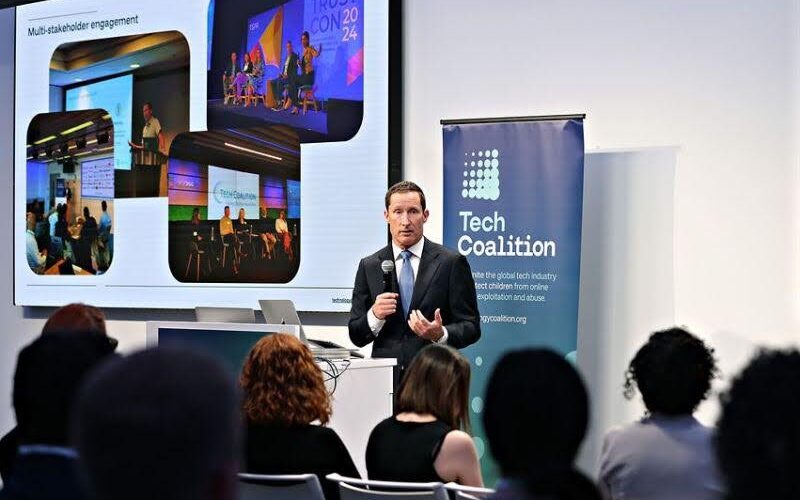
SEP 2025 | NEW YORK, NY
UN General Assembly: Tracking Prevalence and Progress in Online Child Safety
Kaitlin Tiches was excited to be part of a session hosted by the Tech Coalition, focused on strengthening how we measure progress toward increased online child safety. Alongside UNGA, leaders from industry, government, civil society, and academia gathered to discuss how to prevent and detect child sexual exploitation and abuse. The takeaway was clear: without good data, it’s hard to know the true scale of the issue, what’s changing, and which online safety features are working best.
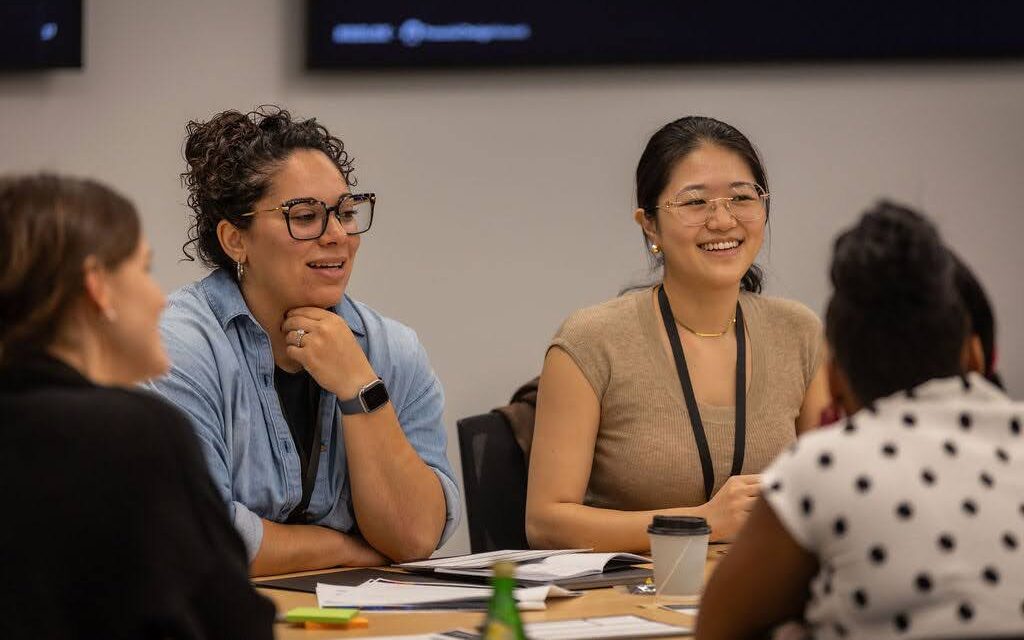
OCT 2025 | SAN MATEO, CA
Fostering Connection in Social Gaming
Dr. Yue joined a group of 40+ researchers from academia and civil society, Roblox team members, and game developers for a workshop convened by the Prosocial Design Network. The aim was to translate research to practice in prosocial design within social gaming environments, and work to identify evidence-based approaches to designing healthy interactions, connections, and community. The outcome of the workshop is a report which is available here.
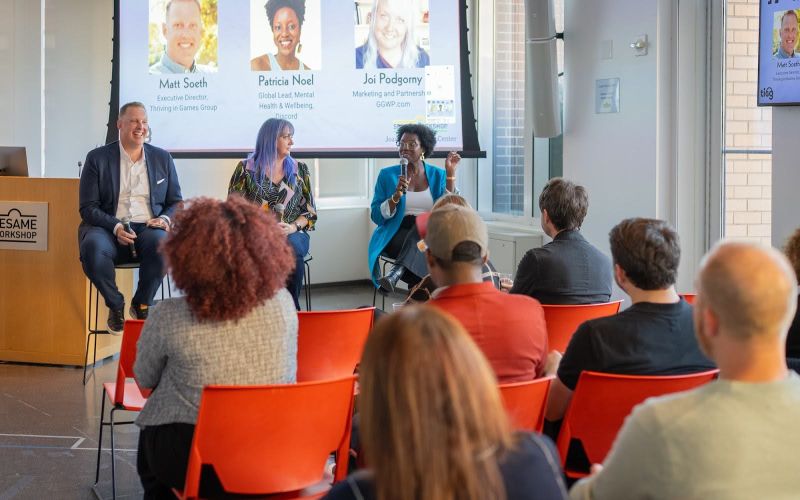
OCT 2025 | NEW YORK, NY
Designing Safe Online Communities to Promote Digital Thriving
Sam Schwamm attended an event co-hosted by the Joan Ganz Cooney Center at Sesame Workshop and the Thriving in Games Group (TIGG). This gathering of developers, researchers, and industry leaders focused on best practices, challenges, and opportunities when designing safe, thriving online gaming spaces for children. A key takeaway was the need for cross-sector collaboration to effectively address systemic design challenges within digital spaces, including prosocial behavior, wellbeing, and community moderation.
Our work is made possible through the generosity of individuals, foundations, and corporate supporters
By bringing together experts from academic research, healthcare, and the corporate sector, we advance our understanding of how media and technology shape young people’s mental, social, and emotional wellbeing. We strive to leverage these insights to drive meaningful improvements in digital design — ensuring that devices, applications, and content support healthier interactions. At the same time, we seek to empower clinicians, educators, and caregivers with the knowledge they need to help young people navigate the digital ecosystem in a safe and healthy way.
To uphold the integrity and independence of our research, we do not conduct work for hire and maintain full control over our methodologies and findings. Our supporters share our commitment to unbiased, science-driven exploration of digital wellness, and our vision of creating a healthier digital ecosystem for young people.
If your organization or foundation is interested in becoming involved as a supporter of our work, please email our Executive Director, Cori Stott.
Get Involved
Help us build a healthier digital future for young people
Support Our Work
Your financial support helps us conduct independent research, develop resources for families and clinicians, and expand initiatives like the Inspired Internet Pledge and Amplify Youth.
Bring Amplify Youth to Your Community
Our workshops meet young people where they are, helping them build on the strategies they’re already using and leave feeling more equipped to shape their digital lives. We work with schools, community organizations, and youth-serving nonprofits across the country.
Join Our Team
We’re always looking for people who share our commitment to improving young people’s digital lives.
Looking Ahead
Looking Ahead to 2026
This year reaffirmed what we’ve long believed: young people are not just participants in the digital world—they are essential partners in shaping its future. As we look to 2026, we are doubling down on that commitment: advancing research that centers youth perspectives, expanding initiatives that bring their voices into decision-making spaces, and equipping families with the tools to navigate meaningful conversations about technology and wellbeing.
We are scaling Amplify Youth significantly, bringing our community-based workshops to schools and organizations around the globe and hosting our second UnMuted Amplify Youth Summit this July. Alongside this growing outreach, the Lab continues to lead at the intersection of technology and human development through an ambitious research agenda, made possible by the unrestricted support of foundations and corporate funders. Our 2026 projects include global studies on connection and wellbeing in a digital world, comprehensive studies on AI and chatbots, and the development of a specialized tool to embed child development into the design of AI-enabled products for young children and families.
Collaboration remains at the core of everything we do. Through the Inspired Internet Pledge, the Youth & Interactive Media Coalition, and our Student Advisory Council, we are bringing together industry leaders, policymakers, researchers, and—most importantly—young people themselves to drive meaningful change.
The path forward is shared. It calls on all of us to act with intention and urgency. Guided by science. Grounded in young people’s lived experiences. Focused on building a digital world that truly supports their wellbeing.
To learn more or get involved, please reach out. Thank you for being part of this work.
We believe that by following the science, we can create an empathetic and respectful world in which our kids can grow up healthy, smart, and kind.

Subscribe to our email newsletter to receive Lab news & insights
©2026 Boston Children’s Hospital. All rights reserved. Terms of Use Privacy Policy