mediaer
-

Q2 Roundup 2023: Together, We’re Building a Healthier Internet
We are proud of our efforts to create a healthier digital ecosystem for kids and the last few months have been especially rewarding! We have been out sharing insights from our research with everyone from NPR to People Magazine; we were cited in the Surgeon General’s Advisory on Social Media and Youth Mental Health; we
-
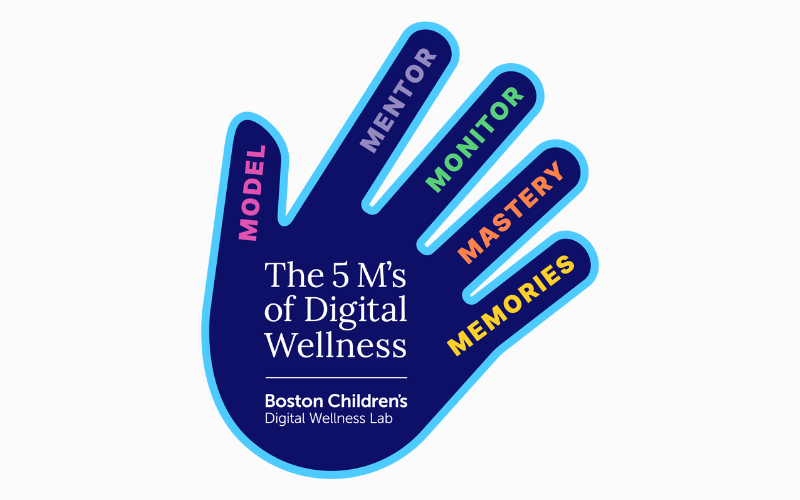
The 5 M’s of Digital Wellness
Just as we wouldn’t hand a child a power tool without first teaching them how to use it, we should teach our kids to use their devices in a positive, purposeful way.
-
Digital Citizenship and Media Literacy
This research brief was inspired by, and focused on information originally published by Elizabeth (Libby) Hunt, a colleague at the Digital Wellness Lab, in Encyclopedia of Child and Adolescent Health What is Digital Citizenship? Digital citizens were once defined as “those who use the internet regularly and effectively – that is, on a daily basis”
-
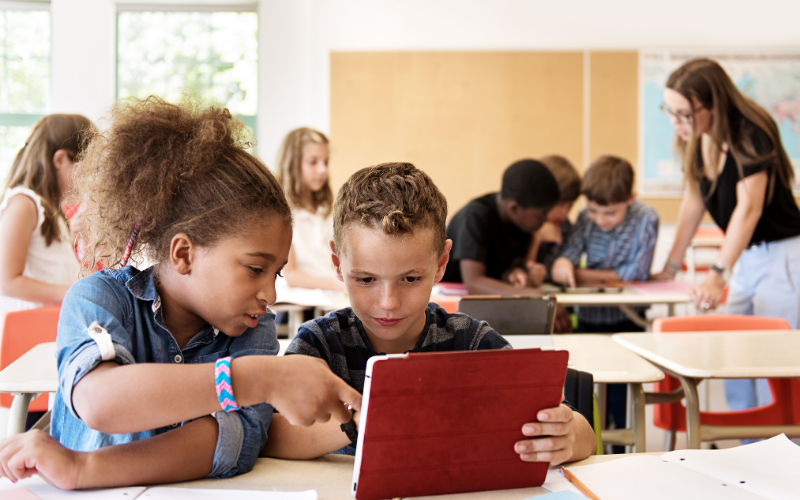
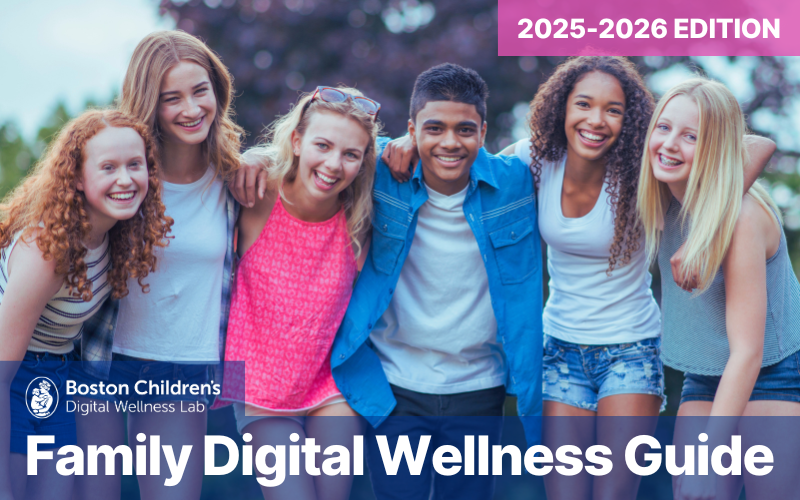
Family Guide to Digital Citizenship
Keeping kids safe in the digital world can feel like a full-time job. But it’s impossible to monitor their online activity 24/7, so it’s critical to help kids learn to navigate digital spaces on their own.
-
Surgeon General’s Advisory on Social Media and Youth Mental Health
We are thrilled to report that research from our August 2022 Pulse Survey was cited in the U.S. Surgeon General’s Advisory on Social Media and Youth Mental Health released on May 23, 2023. Since the report was released, many people have reached out to our team at the Lab to ask us what we think.
-
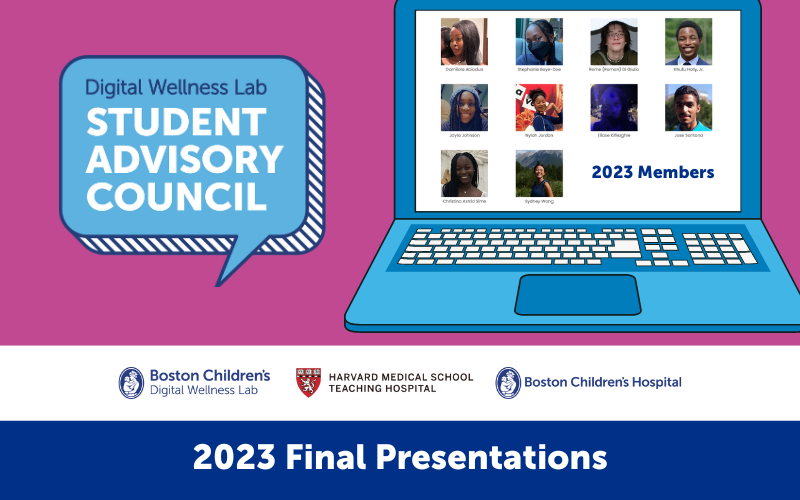
Digital Wellness Lab Student Advisory Council Presents to Researchers and Industry Stakeholders
On Tuesday, May 16, the Digital Wellness Lab’s inaugural Student Advisory Council (SAC) of 10 high school students met over Zoom with an audience of 40 tech, media, healthcare, and education leaders…
-

Announcing the Adolescent Media Project (AMP)
We are excited to announce the Adolescent Media Project (AMP), a collaborative study with Dr. Linda Charmaraman and the Youth, Media, & Wellbeing (YMW) Research Lab at Wellesley College!
-

Family Guide to Teaching Kids and Teens Essential Digital Skills
In a world where toddlers are swiping through screens and tweens are building their online personas, young people need to be equipped…
-
Q1 2023 Digital Wellness Roundup: News, Research, Guides & More
We’ve rounded up some notable articles, videos, and podcasts from the first three months of 2023 to provide an overview of some recent findings, recommendations, and trends concerning young people’s digital media use.
-
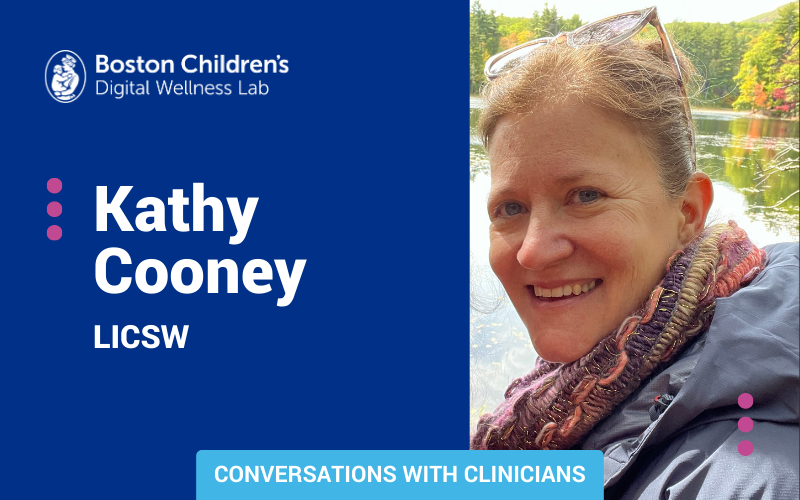
Meet Kathy Cooney, CIMAID Clinical Social Worker
Earlier this year we welcomed Kathy Cooney, LICSW to the Digital Wellness Lab and Clinic for Interactive Media and Internet Disorders (CIMAID) team here at Boston Children’s Hospital.
-

Family Guide: 5 Strategies for Setting Digital Media Boundaries and Guidelines for Kids
Digital media have become deeply embedded in our kids’ lives, with screen time often beginning during toddlerhood. These technologies can provide cognitive, social, and emotional benefits, such as expanded learning opportunities, global connections, and outlets for self-expression.
-
Sharenting: Understanding the Impact on Our Children’s Privacy and Well-being
Sharenting refers to parents sharing content about their children online. Sharenting is an easy, accessible way to share experiences and relate to other parents.
-
“Sharenting” and Child Influencers
What is Sharenting? The rapid rise of social media has made it easier than ever to share pictures with family and friends collectively. Platforms like Facebook and other social media sites and applications could be called “modern-day baby books” (Kumar & Schoenebeck, 2015), as parents engage in “sharenting” (Blum-Ross & Livingston, 2017) by posting content
-
Adolescent Media Use: Mediation and Online Safety Features
In this survey, Adolescent Media Use: Mediation and Online Safety Features, we asked 1,502 adolescents between the ages of 13 and 17 about their general media use and its impact on their well-being, how they think about rules and guidance from their parents and caregivers, and how they utilize the safety tools and features provided
-
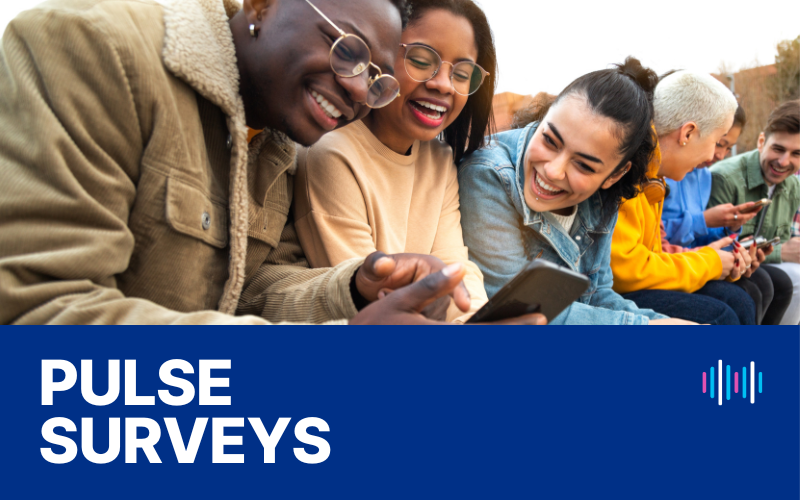
Key Takeaways from Our 2023 Pulse Survey on Parental Mediation and Online Safety Features
The Digital Wellness Lab connects with adolescents regularly throughout the year using short Pulse Surveys to help us better understand their perspectives on “hot button” topics related to technology and interactive media.